100,000,000+ Carts Filled Globally

Categories
General

Terpene Retention: How Automatic Filling Machines Maintain Ideal Terpene Vape Temperature for Quality

Beyond its euphoric effects, one cannabis trait highly regarded and sought after by the plant’s connoisseurs is its aroma and taste. Terpenes are the compounds responsible for the plant’s unique sensory experience, not only in aroma and flavor but also in influencing its effects. 

Altogether, the power of terps for the consumer’s experience makes terpene retention highly important for extractors to address. 

So, if you’re an extractor seeking to scale, improve product quality, or increase customer satisfaction, learning more about terpene preservation when using automated vape-filling machines is crucial. Luckily, this guide will help. 

Here, we’ll explore terpenes and discuss the best temperature-controlled vape-filling equipment for seamless implementation in your operation. 

Terpenes and Their Role in Vape Quality


As we briefly touched upon, two distinct compounds contribute to a strain’s quality: its cannabinoids or effects and its terpenes or flavor. Terpenes play an extremely critical role in customer loyalty and retention, as they affect what many consumers intentionally seek out – specific flavor notes or the effects they help provide. 

The entourage effect is a widely studied phenomenon that experts say proves terpenes and cannabinoids have a synergistic relationship. This means that terpenes and cannabinoids can provide more profound or intense effects when consumed together than individually. 

When consuming one without the other, many consumers report what they may call an “empty” or dull high. So, not only does terpene retention affect the end result for flavor but also for overall experience and effects. That’s why extractors are increasingly exploring precise terpene vape temperatures to protect the contents of their precious extracts

The Impact of Temperature on Terpenes

So, how exactly does temperature affect terpenes? Temperatures play a crucial role in either preserving or degrading these delicate aromatic compounds. Naturally, terpenes are highly volatile molecules that vaporize at different temperatures. Often, at temperatures much lower than most cannabinoids. 

When terpenes are exposed to excessive heat during vaporization or extraction, the fragile compounds can rapidly degrade or evaporate completely. As you just learned, this can fundamentally alter the strain’s intended flavor profile and affect the experience, or “buzz,” of the end product, too. 

Most terpenes begin to degrade between 70°F-100°F (21°C-38°C), with significant deterioration occurring at temperatures exceeding 120°F (49°C). This presents a considerable challenge for extractors who must balance effective cannabinoid extraction with terpene preservation, which often requires higher temperatures. 

It also affects the manufacturing of common products, such as all-in-one vape devices or vape cartridges. For vape cartridge production, operators must achieve just the right vape juice consistency to fill the products accurately and precisely for the utmost consumer success. This, of course, requires the best temperature-controlled vape filling machine. 

How Automatic Filling Machines Preserve Terpenes


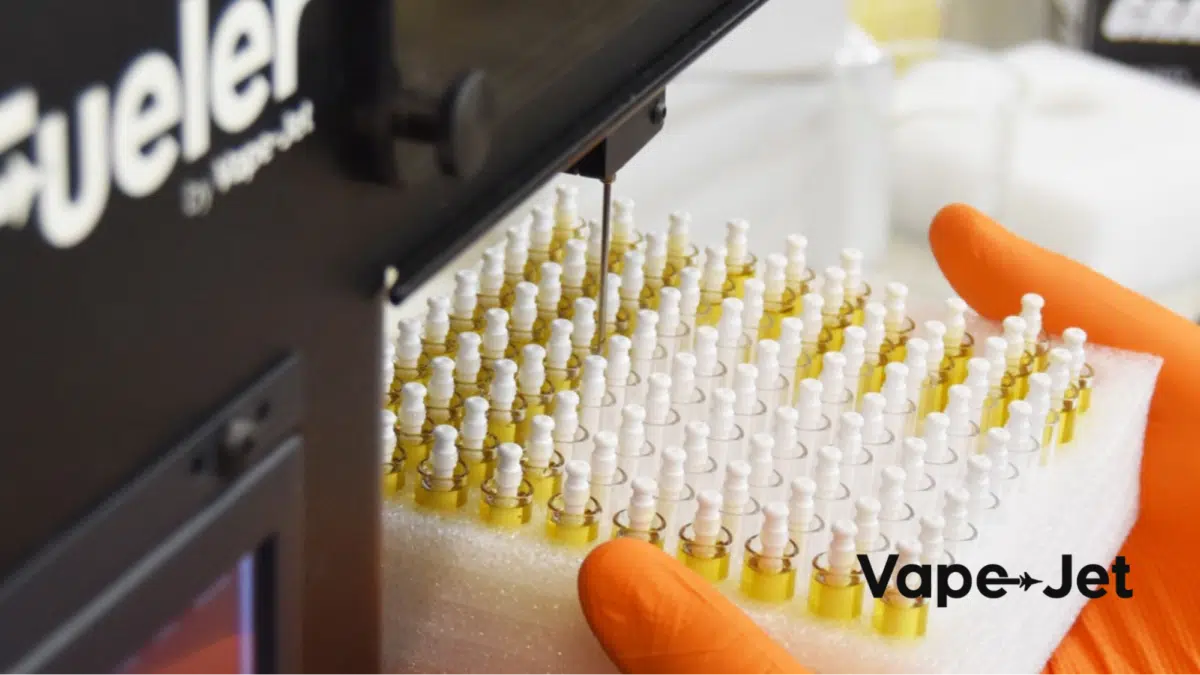
Speaking of machines, how exactly do automated vape-filling machines support terpene retention? It all comes down to temperature controls. Automated vape-filling machines like Vape-Jet are equipped with precision temperature regulation as a core feature. This allows extractors to maintain ideal thermal environments throughout the entire filling process. 

Vape-Jet offers three individual heat zones to address product and strain variety and is also equipped with a nitrogen-pressurized fluid path to eliminate oxygen from the process. This specifically helps to protect product quality and integrity by reducing evaporation, degradation, and oxidation. Together, the attention to temperatures preserves the natural profiles of the extract, unlike other machines on the market today. 

Unlike manual filling methods, automatic filling machines also help alleviate exposing the extract to ambient temperatures and inevitable human-induced heat transfer. Inherently, the automated systems create a consistent and controlled environment from start to finish, reducing exposure types that lead to degradation. 

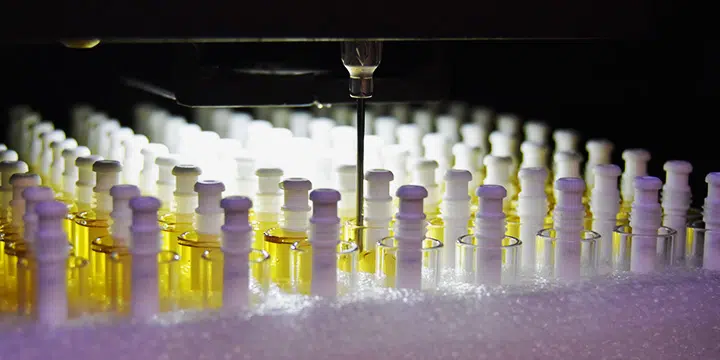
Last but certainly not least, the best temperature-controlled vape filling machines minimize the extract’s exposure time during the filling process, often completing operations in mere seconds rather than minutes. This rapid processing significantly reduces the time that terpenes are exposed to air and vulnerable to degradation. 

Key Benefits of Using Automatic Filling Machines for Terpene Retention

If you’re deciding whether or not to transition from manual to automated filling processes, weighing the benefits will help. While the upfront investment may seem substantial, in the ever-evolving industry and increasing demand for quality, the returns in product quality, consistency, and operational efficiency can give your operation the edge it needs to succeed. 

To help make your decision, here are just a few critical advantages that directly impact terpene preservation and extract integrity and quality. 

  • Superior quality: Deliver consistently terpene-rich extracts that maintain the authentic flavor profile and entourage effect consumers seek, establishing your brand as a quality leader in an increasingly competitive marketplace.
  • Increased efficiency: Fill hundreds of cartridges per hour and thousands per shift with minimal labor requirements. This dramatically reduces production costs for operators while scaling to meet growing market demand—of course, all without sacrificing extract integrity.
  • Brand reputation: Build customer loyalty through reliably consistent, quality experiences with automated processes. When consumers can depend on your products to deliver the same flavor profile and effects with every purchase, they’ll not only purchase repeatedly themselves but spread good word of mouth.  
  • Reduced waste: Are you sick and tired of losing product due to overfilling and spillage? Automated filling machines help minimize costly extract loss through precise dosing systems, maximizing the yield from every production batch.
  • Product shelf life: By preventing the terpene degradation that occurs with manual handling, you can create products with significantly longer viability periods, reduce returns, and enhance retailer confidence.

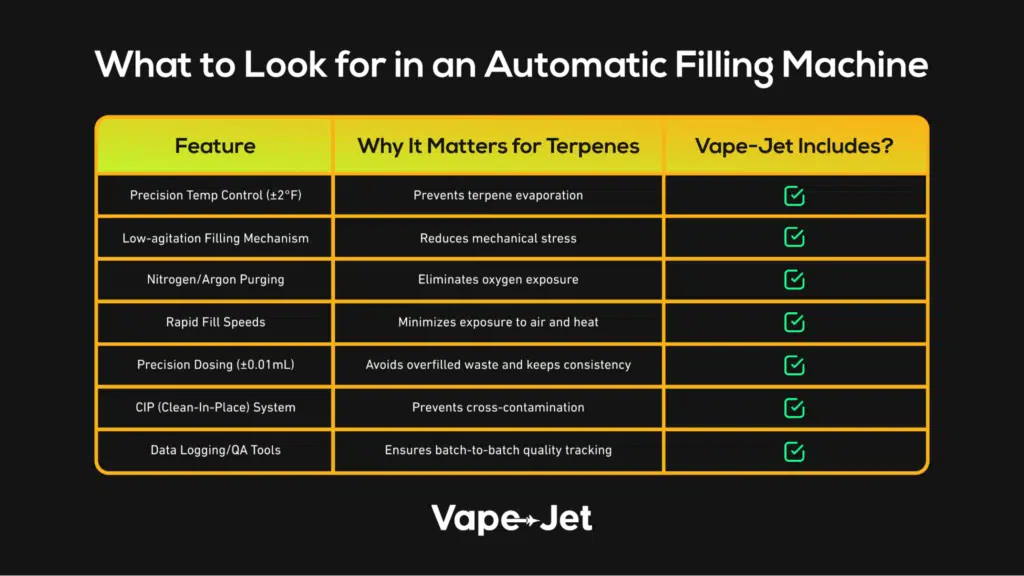
What to Look for in an Automatic Filling Machine for Terpene Retention

If you’re looking for an automatic filling machine that specifically supports terpene retention, you’ll want to check off a few features prior to purchasing. The right machine will preserve delicate terpene profiles and should serve beyond basic operational capabilities. 

The right equipment is a critical quality control checkpoint that can either protect or compromise the aromatic compounds that differentiate your products in the marketplace. As extraction technology advances, filling equipment must similarly evolve to maintain the integrity of these sophisticated formulations from production to consumption.

Key features to prioritize include:

  1. Comprehensive temperature control and precision regulation to within ±2°F.
  2. Low-agitation filling mechanisms that minimize mechanical disruption and vibration during the filling process.
  3. Environment capabilities using nitrogen or argon purging systems to eliminate oxidative degradation
  4. Precision dosing technology with an accuracy of 0.01mL to ensure consistent fill volumes without waste.
  5. Rapid processing speeds reduce exposure time while maintaining gentle handling procedures.
  6. Clean-in-place (CIP) systems for efficient changeovers between product batches without contamination.
  7. Data logging and quality assurance tools that track critical parameters throughout the filling process for documentation and process optimization.
  8. Industry-leading support for reduced downtime due to repairs and reconfigurations. 

Best Practices for Maintaining Ideal Terpene Temperatures


Finally, you’ll want to prioritize protecting the integrity of terpenes not just the filling process but the entire process from extraction to sale. Preserving terpene integrity extends well beyond the vape filling process and should be integrated throughout your entire production ecosystem. 

First and foremost, storing all raw extracts in temperature-controlled environments between 35°F-50°F (2°C-10°C) is key. The savviest operations go beyond and use dedicated refrigeration units with backup power systems to prevent fluctuations during outages. 

Next, transporting the extracts between storage spaces and production stages helps to use vacuum-insulated containers that maintain stable temperatures regardless of ambient conditions. Training and SOPs will also be key to implementing strict staff handling protocols. 

These should instruct your team to use chilled tools when handling and limiting extract exposure to room temperature to under three minutes. To go even further, be sure you’re monitoring storage areas with calibrated temperature sensors that provide real-time alerts when conditions deviate from optimal ranges. 

Lastly, extend temperature control to your distribution chain, working with partners who maintain cold-chain logistics and educating retailers about proper storage requirements. Remember that every temperature spike, however brief, contributes to cumulative terpene degradation.

Long-Term Value of Investing in Quality Equipment

At the end of the day, the quality of your equipment is often the edge you have over the competition. Investing in advanced or innovative equipment or top-of-the-line, tried-and-true tested machines can significantly impact not just your operation’s bottom line but also your brand reputation, customer loyalty, and the morale and culture of your company. 

On the same note, terpene retention must be a priority for extract brands seeking to produce top-shelf, high-quality products. A fact that only heightens the importance of seeking out the best temperature-controlled vape-filling machines. 

Vape-Jet is the leading automated vape-filling machine operators choose for the utmost terpene preservation, maximum throughput, filling accuracy, and ease of use. Fill smarter with industry-leading product support, process consultation, warranty, and training included with every machine. Invest in Vape-Jet ‘s automatic filling machines for the best terpene retention in your vapes. 

Get in touch with the Vape-Jet team to invest in quality equipment to preserve and protect your quality products today. 

Categories
General

Maximize Efficiency & Quality: How Automated Cleaning Systems Improve Vape Cartridge Filling

There are very few operational tasks that require downtime for cleaning. But as you know, there’s nothing ordinary about the cannabis industry. When it comes to filling some of the most popular consumption methods (510 carts and all-in-one devices), cleaning couldn’t be more crucial for the process—leading operators to deal with the unfortunate side effect of necessary downtime. 

In a world where vape cartridge filling machine cleaning couldn’t be more critical, it’s even more important to understand what systems or equipment can help you be more efficient. So, if you’re here to increase your facility’s throughput, improve overall efficiency, or simply overtake the competition, you’re in the right place. 

In this comprehensive guide, we’ll cover everything first-time and seasoned veteran operators need to know about vape cartridge cleaning systems. Keep reading as we cover the most significant drawbacks or challenges of manual cleaning, how automated cleaning for cannabis oil filling works, ways to implement it into your operations, and beyond. 

The Challenges of Manual Cleaning in Vape Cartridge Filling

To best understand the solutions for vape cartridge filling machine cleaning, you need to become more familiar with the challenges associated with manual cleaning if you aren’t already. Before getting into how clean-in-place automatic vape cartridge machines work, let’s first cover the top challenges related to cleaning equipment yourself. 

Inconsistent Cleaning Results

Consistency with automated vape-filling machines is crucial for operators seeking to build customer loyalty and retention. Just one negative experience with your brand can cause customers never to return to purchase again. Offering a consistent, quality 510 cart or all-in-one device is of utmost importance to ensure long-term success, and automated cleaning for cannabis oil filling can help. 

When manually cleaning, it’s common to experience inconsistent or varying results depending on the employee operating the machines, the oil you’re filling, and other factors. This inconsistency can leave behind residual oils or cleaning agents that affect the quality and taste of subsequent fills, potentially compromising product consistency and brand reputation.

Streamlining and automating the process guarantees the same results each time, resulting in a higher-quality product and more efficient methods. 

Downtime & Production Delays

Viscosity changes in concentrates aren’t the only challenge causing bottlenecks for vape cartridge filling. The time it takes to manually clean the equipment between batches also adds to delays in the process. Automated vape cartridge cleaning systems can take as little time as 10 minutes to complete the process. In comparison, manual processes could take double or triple the time.

Breaking down filling equipment for manual cleaning requires careful disassembling of multiple components, thorough cleaning of each part, and precise reassembly to ensure proper operation. This process not only extends production downtime but also increases the risk of equipment damage or improper reassembly, which can lead to malfunctions and further delays. 

Simply put a task that should take minutes with clean-in-place automatic vape cartridge machines can stretch into hours when factoring in the complete breakdown, cleaning, and setup cycle required for manual processes.

Labor Costs & Human Error

Every minute spent cleaning a vape filling machine is money lost when you could be using automated cleaning systems. Manually cleaning systems require dedicated staff and training time to be completed successfully. This increases operational costs and overtime while opening up the possibilities for human error. 

Depending on your employees’ skill, time, or individual efforts, they can miss hard-to-reach areas, use incorrect cleaning solutions, or fail to follow proper procedures consistently. These mistakes can lead to cross-contamination between batches, equipment damage, or product quality issues—all of which result in additional expenses through wasted product, repairs, and potential recalls.

Compliance Risks

In the cannabis industry, everything operators do, from seed to sale, is highly regulated. That means maintaining detailed cleaning lots and demonstrating consistent sanitation procedures is essential for passing inspections and maintaining licenses. 

In general, it’s difficult to standardize and document cleaning protocols with manual cleaning processes, which can potentially put operations at risk during audits. Advanced equipment with automated vape cartridge cleaning systems will often be equipped with the technology to output reports and logs of operation, including when the machines were cleaned. 

Manufacturers may struggle to prove their adherence to state-mandated cleaning and safety requirements without automated systems, which could further cost operations in downtime due to violations, fines, or fees. 

What Are Automated Cleaning Systems?

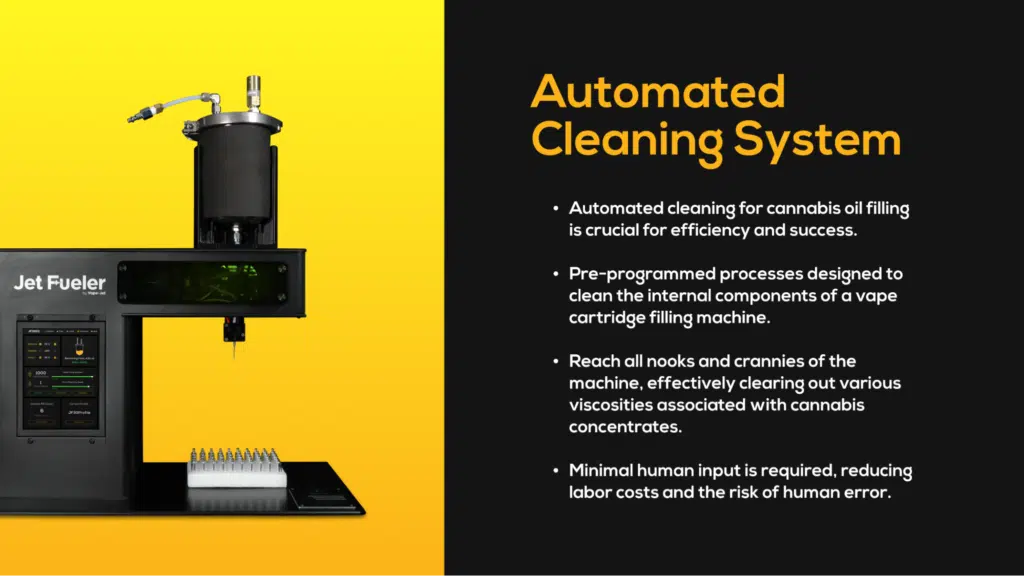
Whether you’re seeking a fully automated or semi-automated machine, ensuring either piece of equipment has automated cleaning for cannabis oil filling is key for overall efficiency and success. Automated cleaning systems are just what they sound like. They’re pre-programmed processes that work to clean the internal parts of a vape cartridge filling machine. 

They’re designed to reach all the nooks and crannies of the machine and clear out various types of viscosities that are associated with cannabis concentrates, with as little human input as possible. For instance, the Jet Fueler clean-in-place procedure and Vape-Jet clean-in-place procedures empower operators to simply add alcohol, and with a few clicks, the machine is operational again in less than ten minutes. 

Advantages of Automated Cleaning for Vape Cartridge Filling

Now that you know the challenges associated with manual cleaning and how automated vape cartridge cleaning systems work, let’s review all the advantages your operation can benefit from when making the switch. 

  • Increased Efficiency & Reduced Downtime

As we mentioned earlier, when implementing clean-in-place systems, your facility can avoid the process it takes to disassemble equipment and manually scrub its inner parts. This significantly reduces the amount of downtime associated with the process to as little as 10 minutes with the most advanced equipment. 

By eliminating bottlenecks, facilities can maximize throughput, allowing for more batches per shift while reducing labor costs associated with manual cleaning procedures.

  • Improved Product Quality & Consistency

Ensuring your systems are precise, with repeatable results, is crucial in producing a consistent, quality product. Automated cleaning systems help deliver these advantages by thoroughly cleaning all equipment surfaces and components in every batch run. 

By eliminating variations in manual cleaning techniques, these systems also prevent cross-contamination between batches, further helping to maintain consistent product quality. The standardized cleaning process removes all residual oils and cleaning agents, preserving the intended flavor profile and ensuring every cartridge meets the brand’s standards. 

Versatility in semi-automatic filling machines or automatic filling machines can also lend to facilities expanding their number of SKUs with the ability to switch between concentrate or product types seamlessly. 

  • Compliance & Safety in Cannabis Vape Production

In cannabis, it’s not just about putting out a product that customers will return to buy. It’s about putting out a product that’ll pass testing and staying in compliance with procedures. Clean-in-place systems often provide detailed documentation of each bath run, including cleaning cycle information such as duration, temperature, and solutions used. 

This not only provides peace of mind during inspections or audits, but more importantly, automated cleaning systems can also increase your facility’s safety. Clean-in-place automatic vape cartridge machines reduce worker exposure to cleaning chemicals and eliminate the risk of improper equipment reassembly, creating a safer production environment while ensuring consistent adherence to safety protocols.

Implementing an Automated Cleaning System in Your Vape Production With Vape-Jet

Implementing an automated cleaning system into your vape production doesn’t have to be a heavy lift. While the initial investment for clean-in-place automatic vape cartridge machines like Vape-Jet may seem significant, the machine’s advantages help reduce labor costs immediately (up to 90%), and operators often see an ROI in just 65 days. 

Vape-Jet is widely considered the best THC vape cartridge filling machine cleaning-wise, operational-wise, and support-wise. The machine allows operators to seamlessly fill 5,000 and 10,000 vape cartridges and all-in-one devices per shift, with the lowest labor inputs and operating temperatures of any machine on the market—and one of the best vape cartridge cleaning systems available today. 

Gain the consistency with automated vape-filling machines you need to succeed with Vape-Jet. 

Vape-Jet Cleaning Procedure

Of course, not all vape cartridge cleaning systems can be treated equally. The Vape-Jet’s Clean-in-Place procedure is highly regarded as one of the most advanced systems on the market today, making the cleaning process simple and quick. The internal cleaning wizard requires just 200 ml of alcohol and goes to work cleaning and drying the machine, ready for a new batch with just a few clicks. 

The entire process, from start to finish, takes less than 10 minutes and is nearly entirely automated. Ready to transform the way your operation works (and cleans)? Put the Vape-Jet 4.0 automated clean-in-place system to work for you. Browse our FAQs for any other questions you may have before getting started, or contact our team to learn how to empower your efficiency now. 

Categories
General

Adapting to Diverse Extracts: Versatility in Semi-Automatic Filling Machines for Various Concentrate Types

In the world of extracts, it’s no longer simply distillate; extractors must fill in their 510 carts or all-in-one devices. Today, extracts range from liquid diamonds to live rosin, live resin to sauce, and beyond. Because each of these extracts has a varying viscosity, adapting to these diverse extracts can quickly become a bottleneck for operations. 

For extractors, streamlining the filling process is key to keeping up with production and eventually scaling exponentially. Hence, semi-automatic filling machines are popular for reducing human error and improving efficiency. 

If you’re an extract company seeking to scale and wondering if semi-automatic can work for different types of concentrates, this is the guide for you. Here, we’ll cover all the basics of improving workflow with varying types of extract and review the best semi-automatic machine for concentrates to consider. 

Challenges of Filling Different Concentrate Types

Even without experience or expertise, you can look at different types of concentrates and understand that challenges may arise from filling containers with sticky extracts. To make matters even more complicated, every batch of concentrate can vary in consistency, from strain to strain and phenotype to phenotype. 

However, understanding these challenges helps you optimize production processes and find the best cart-filling machines for various concentrates. To help you do either, here are the top challenges facing extractors today in regard to filling 510 carts and all-in-one devices: 

  • Temperature-driven viscosity control: Concentrates like live resins and “sauces” undergo significant viscosity changes with temperature fluctuations. This requires maintaining optimal temperature throughout the filling process to prevent waste and ensure accurate dispensing. Another challenge is to balance the temperature so as not to affect the end product’s quality, as too warm of a temperature can degrade valuable terpenes. 
  • Terpene loss prevention: Speaking of terpenes, the compounds that contribute to flavor and effects are highly volatile and can quickly evaporate during filling. This becomes even more of a challenge with terpene-rich extracts like live rosin and resins or diamonds in the sauce. The key is to carefully control the environmental conditions while filling and minimizing exposure time for ultimate preservation. 
  • Managing cross-contamination: Moving from jar to filling machine and throughout the various filling steps can put your product at risk for cross-contamination. This is especially crucial when switching between products that promise consumers distinct terpene profiles or potency levels. On the same note, the sticky nature of extracts makes cleaning the equipment extraordinarily time-consuming and resource-intensive.
  • Precise fills: When a material changes densities and textures throughout the process, achieving consistent fill weights becomes much more difficult. Accurately filling the appropriate weight is a significant challenge, affecting consumer perception, retention, and loyalty. 
  • Maintaining homogeneity: During the filling process, products like sugar concentrates and sauce can separate, so they need to be stirred constantly or mixed in a certain way to keep the cannabinoids and terpenes spread evenly throughout the batch. This becomes particularly challenging during large production runs.

How Semi-Automatic Filling Machines Handle Different Concentrates

So, how exactly can semi-automatic filling machines handle different types of concentrates for a quality end product? First, the best cart-filling machines will offer precise temperature controls. The temperature control system maintains optimal warmth throughout the filling process, ensuring thicker concentrates remain fluid enough to flow smoothly while preventing overheating that could degrade more delicate terpenes. 

Many semi-automatic filling machines for sale also offer the ability to fine-tune adjustable pressure systems based on the specific properties of each concentrate, whether it’s a thick rosin or a more fluid distillate. Lastly, unique nozzle designs should keep them from clogging and ensure accurate dispensing, even with thicker than usual extracts. This way, the volumetric measurements can be kept accurate down to the milliliter.

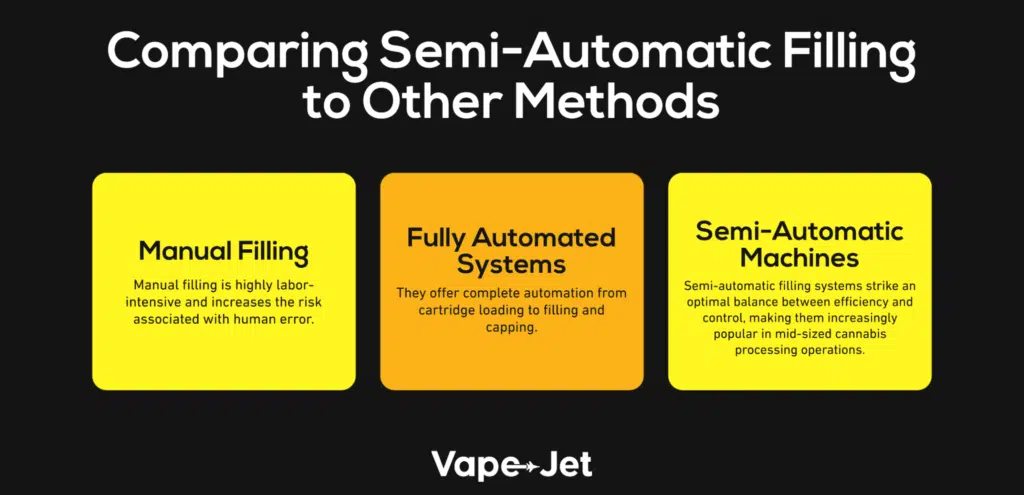
Comparing Semi-Automatic Filling to Other Methods

Next up in our ultimate guide to finding the best cart-filling machine for your operation is comparing semi-automatic versions to the other two popular categories: manual filling and fully automated systems. 

Manual Filling

For many start-up or emerging extract brands, using manual or hand-filling carts and all-in-one devices is a common practice. Unfortunately, operations usually quickly find out why other facilities invest in semi-automatic or fully automatic systems. Manual filling is highly labor-intensive and increases the risk associated with human error. 

These systems typically consist of basic heated reservoirs and hand-operated syringes or plungers that allow operators to fill cartridges one at a time. While they require minimal initial investment and can be suitable for small batches, they have significant limitations. 

The reliance on operator consistency can lead to volume variations between cartridges, which is notably time-consuming. Manual systems also require constant attention to temperature control to maintain proper viscosity, and operators must regularly monitor and adjust heating parameters. 

Fully Automated Systems


Not surprisingly, fully automatic filling machines are the pinnacle of extract operations. They offer complete automation from cartridge loading to filling and capping. These sophisticated systems, like the Vape-Jet, offer AI-powered robotic handling mechanisms, and features that allow operators to skip the loading jig for ultimate efficiency. 

Like semi-automatic filling machines, fully automatic machines come with advanced temperature control systems that maintain precise heating zones, also ensuring consistent viscosity and flow rates across different concentrate formulations. 

The best fully automated machines will also have quality control systems built in. This way, weights can be checked automatically, and units that don’t meet specifications can be addressed. While these systems require substantial initial investment, they deliver unmatched efficiency and consistency for large-scale operations. 

The best perk? Fully automated systems like Vape-Jet provide an interface that allows you to program and store multiple product SKUs, allowing for quick changeovers between different concentrate types while maintaining strict quality control standards throughout extended production runs.

Semi-Automatic Machines

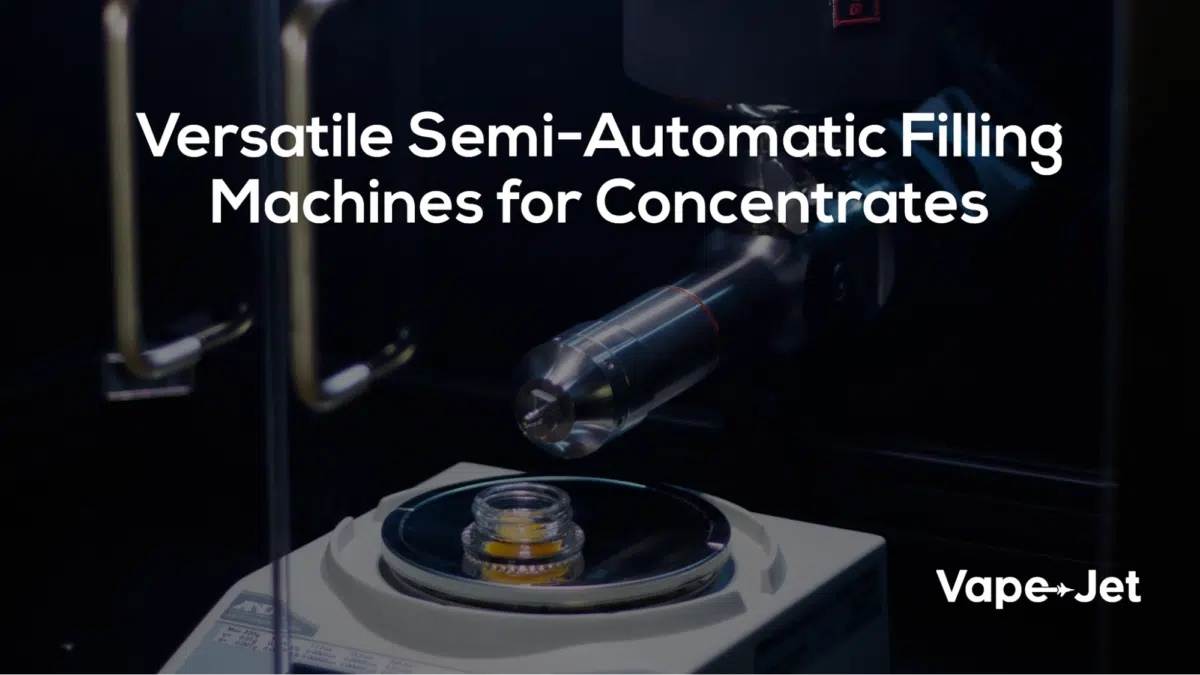
Semi-automatic filling systems strike an optimal balance between efficiency and control, making them increasingly popular in mid-sized cannabis processing operations. These systems typically feature programmable controls for temperature and volume, multiple fill heads that can operate simultaneously, and automated dispensing mechanisms that ensure consistent dosing. 

Operators load empty cartridges into designated stations and initiate the filling sequence, but the actual dispensing process is automated and precise. This hybrid approach significantly reduces human error while maintaining enough operator oversight to quickly adjust parameters when switching between different concentrate formulations. 

These systems usually have precision heating controls and automatic nozzle cleaning cycles that keep the viscosity at the right level throughout the production run. This means that they can produce more at a faster rate than fully automatic systems while also needing less capital investment.

Best Semi-Automatic Filling Machine for Your Needs

The best semi-automatic filling machine for sale today is none other than Vape-Jet’s Jet Fueler. The Jet Fueler is considered one of the best cart-filling machines, even when working with different types of concentrates. Three independently programmable heat zones equip the Jet Fueler to accommodate various extracts. 

More importantly, its proportional-integral-derivative (PID) algorithms eliminate any temperature variation and preserve the overall quality of your products. Whether filing distillate, rosin, CO2, or other extracts, the Jet Fueler’s low temperatures and nitrogen-modified atmosphere processing reduce oxidations, helping to dispense even highly viscous oils with a nitrogen-pressurized fluid-handling system.

Even better for operators, Vape-Jet prides itself on manufacturing the most innovative yet intuitive equipment that can operate seamlessly at any skill level. 

Explore Vape-Jet Semi-Automatic Filling Machines Today 

Now that you know more about the challenges of adapting to different types of concentrates and the best semi-automatic filling machine for the job…what are you waiting for? Prepare your business for take-off with the power of Vape-Jet today! 

Vape-Jet is the leading manufacturer of AI-powered, fully automatic, and semi-automatic filling machines for 510 carts and all-in-one devices. Empower your brand with Vape-Jet’s first-class team for manufacturing innovation and ongoing support.

Explore the Vape-Jet fleet of machines, including semi-automatic filling machines, now, and follow us on Instagram to keep up with all the latest launches and news. 

Categories
General

Quality Control at Scale: Ensuring Product Consistency with Automated Vape-Filling Machines

As the cannabis industry continues to evolve, not only do customer expectations increase, but so does the competition. In today’s legal market, there’s a growing number of extract companies with 510-carts and all-in-one vape products competing for the same audience. That means quality control is crucial to the utmost success. 

So, what are the leading brands turning to, to ensure product consistency from batch to batch? You’ll find many brands seek automated vape filling machines. If your operation is still filling carts or devices by hand or are just launching onto the market, this is the guide for you. Here, we’ll dive deep into why vape cartridge-filling machines are the future of the extract industry. 

Why Precision and Consistency Are Necessary in Vape Filling

To start, let’s first consider the two inputs of vape carts or devices. First, you have either a 510 cart or all-in-one-device that needs to be filled. Second, you have the ooey, gooey, extract that needs to be filled with. From this description alone, you can see how precision and consistency with hand-filling can go awry. Especially considering the space in which to fill the 510 cart or all-in-one device is usually just millimeters in size. 

Hence the importance of automated vape filling systems having the utmost precision for consistency, quality, and even regulatory compliance. In cartridge filling, even minor variations can significantly impact the user experience and product performance. Making it ideal to reduce the amount of variations, through automation versus manual processes. 

Challenges of Manual Processes

When human errors are a possibility in the processes, operations can quickly lose the ability to maintain consistency and therefore quality. To further understand the importance or enhance your success in automated vape-filling machines, we’ll cover the top challenges of manual processes you can overcome with these devices. 

Inconsistent Fill Volumes

First and foremost, for compliance and customer loyalty, consistent fill volumes are key. Unfortunately, manual cartridge filling typically relies solely on operator judgment and technique, which can lead to variations in volumes even among experienced staff. 

These inconsistencies result in quality control issues, with some cartridges being overfilled and others containing less than the intended amount, ultimately affecting product reliability and customer satisfaction.

Reduced Production Capacity

Another disadvantage of manually filling cartridges and all-in-one devices is the inherent slowness of the process. The hand-filling process can create significant bottlenecks in production, and overall reduce the capacity output. 

Even more, it can only be expected for workers to maintain optimal accuracy for limited periods before fatigue naturally starts to set in. This can limit daily output or increase inconsistencies, which makes scaling operations that much more difficult, especially when meeting sudden growth in demand. 

Contamination Risks

Manual processes require frequent handling of both equipment and cartridges by operators, increasing the potential for contamination. This constant interaction can compromise product purity and potentially affect the quality of the final product, creating additional quality control challenges.

Documentation Difficulties

Another difficulty that arises from manually filling vape cartridges and devices comes from documentation. When this requires human operators to not only fill but maintain accurate and detailed production records, your chances of getting both, are significantly reduced. 

Automatic vape machines allow operators to track batch histories, identify the source of problems, and demonstrate compliance with regulatory requirements, when need be. 

Worker Well-Being 

Hand-filling exposes workers to repetitive motion strain and potential contact with liquids. These ergonomic and safety challenges not only affect worker well-being but can also lead to increased workplace injuries and associated downtime.

How Automation Ensures Consistency and Quality

Now that you know more about the challenges of manual vape filling processes, let’s cover all the main ways that automation helps to ensure consistency and quality. 

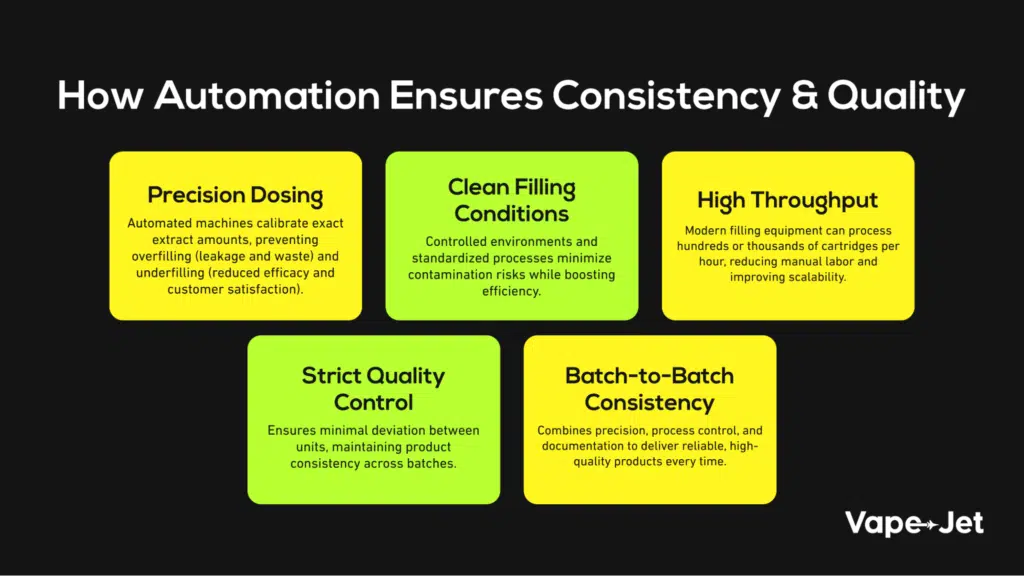
Precision vape cartridge filling machines calibrate the exact amount of extract dispensed into each cartridge, typically measured in microliters, to maintain consistent dosing across batches. This precision prevents issues like overfilling, which can lead to leakage and waste, or underfilling, which affects product efficacy and customer satisfaction. 

Automated systems also help maintain clean filling conditions through controlled environments and standardized processes, helping to boost efficiency, too. The speed and accuracy of modern filling equipment enable manufacturers to achieve higher throughput while maintaining strict quality control – automated systems can fill hundreds or thousands of cartridges per hour with minimal deviation between units. 

Additionally, detailed monitoring and data logging capabilities allow manufacturers to document their processes, track key metrics, and demonstrate compliance with manufacturing standards. This combination of precision dispensing, process control, and documentation helps ensure that each cartridge meets specifications and that products remain consistent from batch to batch.

Key Benefits of Automated Vape-Filling Machines

So, what are some tangible benefits you can expect to see when switching over from hand-filling to automatic vape machine filling? Let’s cover all of the advantages of automated vape-filling machines, next. 

Enhanced Product Consistency

To reiterate, maintaining consistent product quality across all batches is essential for fostering brand trust and customer loyalty. Customers will continue to return to your brand and product when they can rely on getting the same high-quality experience with every purchase. Automated vape filling machine’s ability to precisely fill, and provide quality control, directly translates to improved customer satisfaction and retention.

Scalability and Market Responsiveness

Many facilities face the challenge of higher demand, without the capabilities to fulfill with supply. Automatic vape machines help overcome this challenge, with the ability to fill between 5,000 and 10,000 cartridges per shift. This allows operations to quickly respond to market demand fluctuations, and improve their scalability. 

Therefore, awarding them the ability to take on larger contracts, expand their market presence, and grow their business without as many growing pains as associated with manual operations. 

Brand Reputation and Premium Positioning

When you invest in advanced manufacturing technology, you can communicate a higher commitment to quality than other competitor brands. Automatic vape machines give companies the confidence to claim superior product consistency and quality in marketing campaigns, and can also justify premium pricing. Overall, this strengthens their market position against competitors using less sophisticated methods.

Regulatory Compliance and Risk Reduction

Automated systems’ detailed data tracking and reporting capabilities help businesses maintain compliance with evolving industry regulations. This comprehensive documentation not only satisfies regulatory requirements but also provides protection against potential liability issues and helps maintain necessary certifications and licenses.

Long-term Cost Efficiency

While the initial investment in automated equipment is significant, the reduction in labor costs, product waste, and quality control issues provides substantial long-term savings. Improved operational efficiency and reduced error rates contribute to a stronger bottom line and better overall business health.

Market Expansion Opportunities

The ability to consistently produce high-quality products at scale opens doors to new market opportunities, including potential wholesale partnerships and white-label manufacturing contracts. Automated systems’ adaptability to different product types also allows businesses to diversify their product lines with minimal additional investment.

Take the First Step Toward Precision and Quality


Now that you understand why precision and consistency are crucial for extractors to scale, it’s time to take the first step toward improving your operation’s quality control. That is – exploring the availability of automated vape filling machines and deciding which is best to boost your business.

Vape-Jet Automatic Filling Machines

There’s no question about who the leading manufacturer and innovator of automated vape filling machines is. Vape-Jet is one of the most popular and fastest-growing automatic vape machines that extract companies’ trust coast-to-coast. From Michigan and Massachusetts to Washington and California, the fleet of automated machines helps brands scale with unmatched accuracy and efficiency for the ultimate quality control. 

Before you go, take a look at their complete collection of automated vape-filling machines and other equipment designed to maximize the success of operations. 

  • Vape-Jet: The premier automatic vape cartridge filling machine can fill between 5,000 and 10,000 cartridges and all-in-one devices per shift with the lowest labor inputs and lowest operating temperatures of any machine on the market. It allows operators to skip the loading jig, thanks to its vision alignment system, better preserves the product with its built-in environmental controls, and is easily adaptable to different product types to eliminate downtime and support scaling with various SKUs. 
  • Jet Fueler: The Jet Fueler is Vape-Jet’s semi-automatic vape cartridge filling machine that offers similar efficiency but requires slightly more human assistance to operate. It too can fill between 5000 and 9000 vape cartridges per shift with temperature control for quality purposes and clean-in-place features to reduce downtime. 
  • Dab Dispenser: Say goodbye to watching your team hand-gram concentrates, and hello to a whole new world of quality control and efficiency with Vape-Jet’s Dab Dispenser. This semi-automatic jar-filling machine simultaneously fills and weight checks up to 500 1 g jars an hour. It features a software-integrated scale, precision dispensing, and quick reservoir changeovers to streamline packaging workflow and delivers ±1% fill accuracy with minimal waste and maximum quality control.

Learn how the fleet stacks up against the competition here, or browse the frequently asked questions from operators like you. Ready to equip your operation with Vape-Jet? Get in touch with our team to learn how Vape-Jet can benefit your business, now. 

Categories
General

Versatility In Cannabis Concentrate Dispensers: Adapting To Different Types Of Concentrates

What helps make the most eclectic and versatile cannabis extract brand on the market today? Versatility with your cannabis concentrate dispenser. In today’s world of extracts, consumers are increasingly seeking vape products that provide a quality experience without spitting from the mouthpiece or hard pulls. 

However, concentrates like live resin or rosin differ in consistency and filling ability compared to distillate, complicating operations for vape brands looking to meet consumer demand.  

So, how can your brand keep up? It all comes down to the type of THC concentrate dispenser your facility is equipped with. Here, we’ll dive deep into cannabis oil dispensers for all concentrate types to help you find the one that’s right for you—and to learn why leading brands choose Vape-Jet.  

Keep reading to learn more about cannabis concentrate dispensers that help scale SKUs seamlessly. 

How Dispensers Handle Various Concentrate Types

There are three major types of cannabis concentrates for filling vape cartridges or all-in-one devices that vary greatly. Let’s cover their unique characteristics and how they affect cannabis concentrate dispensers. 

Distillates

Distillate, while one of the more “oil-like” consistencies, is still a thick, syrupy texture that can require dispensers equipped for specialty handling for the utmost success. What’s important to understand about distillate is that its process strips away many minor cannabinoids and terpenes with the heat and pressure involved. 

That means it won’t necessarily require as many enhanced dispenser features to protect the natural integrity of the extract. However, to remain versatile as a cannabis brand, it’s always recommended to invest in equipment that allows you to scale to various extract types. 

Live Resin

Live resin is a cannabis concentrate that’s richer in terpenes and cannabinoids, again, due to its unique process. The “live” terminology refers to the fact that the flower material was freshly frozen upon harvesting. This method preserves the plant’s natural profiles at their peak for the highest flavor and most well-rounded consumer experience. 

To handle live resin, dispensers will benefit from temperature regulation to handle its thick consistency while preserving its strain-specific compounds. Wide-nozzle openings help accommodate its thicker texture, ensuring an even flow without clogging. While airtight seals will help maintain freshness by locking in volatile terpenes that give live resin its signature aroma and potency.

Rosin

Rosin or live rosin is the most precious of cannabis concentrates, as it’s made with solventless extraction methods. With the care put into preserving the strain’s natural profile (without the use of harmful solvents like butane), the same care should be put into preserving the concentrate while dispensing. 

The extract also just so happens to be the thickest of all, although various methods can help alter the consistency. To assist here, high-pressure dispensing mechanisms help push rosin through the applicator without clogging. On a similar note, anti-stick coatings on internal components or automatic cleaning in place can help reduce buildup, making the messy process that much easier for more efficient operations.

Other Concentrates 

In today’s cannabis industry, concentrates are consistently evolving. From distillates to rosin to liquid diamonds and sugar sauce, it’s wise to expect extracts to continue to evolve, requiring adaptation from the piece of equipment you invest in. 

What Makes Cannabis Concentrate Dispensers Versatile

Now that you know how dispensers handle various concentrate types, what makes each dispenser so versatile? Cannabis concentrate dispensers should accommodate a wide range of extract types, from thick waxes and shatters to runnier oils and sauces. This versatility comes from several key features that enable seamless handling of different consistencies while ensuring precision, preservation, and ease of use.

For comparison purposes, here are the top components of cannabis oil dispensers that allow them to handle different types of concentrates easily. 

  1. Adjustable dosing: Cannabis oil dispensers that allow for various configurations to deliver precise amounts of concentrate regardless of its viscosity, are key. This prevents overuse, extends product life, and ensures a consistent experience. 
  2. Materials: Dispensers crafted from glass, medical-grade plastics, or specialized metals can store concentrates without degrading terpenes or cannabinoids, preserving flavor and potency.
  3. Temperature regulation: Equipment with built-in temperature regulation or pre-set zones improves adaptability by preventing thick concentrates from hardening, ensuring smooth dispensing even in colder environments.
  4. Anti-clog features: Features that prevent clogging, such as specialized nozzles and airtight seals, reduce product buildup, and keep the dispenser functioning properly over time.
  5. Interchangeability: Dispenser designs that include interchangeable components, such as machine vision alignment systems to skip loading jigs or customizable applicator tips, allow brands to tailor the device to specific product types or consumer preferences. 

Considerations When Choosing Cannabis Concentrate Dispensers

When selecting cannabis concentrate dispensers, extract brands must balance functionality, efficiency, and product preservation for the best ROI and bottom line. To do so, here are the key considerations to factor into your decision when selecting the right cannabis oil dispenser for your operation: 

  • Versatility: Ensure the equipment is manufactured to work with various concentrate viscosities with features like configuration profiles for automation, individual heat zones, etc.
  • Dosing and fill accuracy: Provides precise and consistent dosing and fill volume with features such as pharmaceutical-grade pumps and beyond.  
  • Ease of use: To keep your operation running seamlessly, an intuitive design that’s easily adaptable for all learning types and employees is key. 

All in all, your facility’s THC concentrate dispenser will affect the end product. Choosing the right dispenser ensures an optimal consumer experience while protecting product integrity and supporting brand differentiation in a competitive market.

Getting Adaptable Equipment For Your Operation

To end as we began, one of the top ways to expand your extract brand is to offer a variety of SKUs, from a versatile cannabis concentrate dispenser. That’s why Vape-Jet has meticulously designed our fleet of THC concentrate dispensers to handle everything from distillate to rosin, and all the extracts in between (we see you, sugar sauce!). 

Learn more about the Vape-Jet for vape devices, our Dab Dispenser for jars, or our entire collection of semi- and fully- automatic filling machines now. Need help deciding what’s right for you? Get in touch with our industry-leading team to help you equip your facility for ultimate efficiency, quality, and success. 

Categories
General

How To Handle Viscosity Changes In Cannabis Vape Production

The cannabis plant is one of the most complex in the world. Not only does the plant compound content vary from strain to strain, but it can also vary from cultivator to cultivator and environment to environment.  

Complicating things even further is the fact that these complexities and how oil is extracted can affect cannabis oil’s viscosity. If viscosity varies from strain to strain and batch to batch, this poses a significant challenge for those filling vape carts and all-in-one vape devices. 

To help you navigate the most common and complex challenges in cannabis vape production, we answer the question, “How to handle viscosity changes?” in our ultimate guide. Keep reading to learn more about viscosity management, techniques, and equipment to help. 

Why Viscosity Management Is Critical

Put simply, viscosity management is critical when producing cannabis vapes because it directly impacts both product quality and safety. More scientifically, the proper viscosity ensures even heating and vaporization of the oil, preventing inadequate delivery and overheating. Too thick of oil can lead to clogging and poor wicking. Too thin of a mixture may leak or vaporize too quickly, potentially causing sputtering and leaking. 

In the competitive cannabis market, one bad vape experience (one that pulls too hard or leaks) can immediately negatively affect customer loyalty and retention. So, understanding viscosity and closely monitoring and managing it is crucial to being considered a “top-shelf” brand. 

Viscosity’s Impact On Vaporization Technology

There are no ifs, ands, or buts about it; the viscosity profile of cannabis oil also directly influences how vaporization hardware performs. Optimal viscosity ensures proper wicking through cotton, ceramic, or mesh materials to the heating element in all-in-one devices and battery cartridge systems. 

When viscosity is too high, it strains the battery by requiring more power to heat the thicker oil, reducing battery life and potentially leading to burnout. Conversely, too thin oils can flood heating chambers, causing uneven heating and potential device failure. 

Modern vaporizer batteries typically operate between 2.5 and 4.8V, meaning the oil’s viscosity must be calibrated to perform consistently across this voltage range. With the popularity of temperature-controlled devices, precise viscosity helps maintain accurate temperature regulation and prevents degradation of cannabinoids and hardware components. 

This offers consumers a more accurate representation of the plant’s complex profiles and a higher-quality buzz. Overall, managing viscosity is vital for not only the consumer experience but also for maintaining the integrity of device technology. 

Problems With Viscosity In Production

Understanding the most common problems with viscosity in production will help you better understand the solutions and improve how your lab or facility works. So, if you’re lucky enough not to have experienced these already or are new to the subject, here are some significant issues with viscosity vape filling. 

  1. Temperature Fluctuations: During production, ambient temperature changes can dramatically affect oil viscosity, leading to inconsistent fill volumes and weights. Oil temperature can expand or contract when it varies, causing over or underfilling of cartridges and devices.
  2. Homogenization Issues: Inadequate viscosity can result in poor homogenization of cannabinoids, terpenes, and carriers. This leads to the degradation of the compounds and inconsistent potency throughout the batch.
  3. Air Bubbles: When oil viscosity is too high during filling, it can trap air pockets within the cartridge. These bubbles can affect customer satisfaction, cause heating issues, and potentially damage the device’s atomizer.
  4. Flow Rate Inconsistencies: Improper viscosity management disrupts automated filling systems’ flow rates, causing irregular dispensing patterns. This leads to production delays, waste, and inconsistent fill levels across batches.
  5. Equipment Clogging: Overly thick oils can clog filling needles, pumps, and transfer lines. This requires frequent cleaning cycles, reduces production efficiency, and increases the risk of equipment damage.
  6. Post-Fill Migration: Insufficient viscosity control can allow oil to seep into threading or other cartridge components after filling, creating cleanliness issues and potential device failures.

Techniques For Managing Viscosity Changes


Now that you understand the problems, the next thing to understand for “how to handle viscosity changes” are the techniques or solutions you can implement to help.  

Precision Temperature Control

Precision temperature control is crucial to maintaining the optimal viscosity throughout the production process. This includes not only vape filing but also critical points during the process. From bulk storage to filling, an ideal working viscosity is typically at 45-65°C (113-150°F). 

Consistent temperature control prevents the common issues of:

  • Irregular flow rates
  • Trapped air bubbles
  • Inconsistent fills 

Advanced systems often offer extractors real-time viscosity monitoring coupled with temperature controllers to make micro-adjustments. This helps ensure the oil maintains proper flow characteristics from the first cartridge to the last of a production run.

Real-Time Monitoring And Testing

Real-time monitoring and testing during vape filling employ advanced viscometry sensors and inline testing equipment to measure oil viscosity continuously throughout production. These systems typically use rotational or vibrational viscometers integrated directly into the filling line, providing immediate feedback on viscosity changes. 

When deviations from target specifications are detected, automated systems can adjust temperature controls or alert operators before quality issues arise. Regular sampling and laboratory testing complement real-time monitoring, offering detailed analysis of viscosity stability, ensuring consistency across batches, and validating in-line measurements. 

This dual approach of continuous monitoring and periodic verification helps maintain precise viscosity control, which is essential for high-quality vape production.

Viscosity And Vaporization: Ensuring Device Compatibility

Again, it’s not just about getting the viscosity right for optimal filling; it’s about offering consumers a device compatible with the extract’s viscosity for optimal vaporization. 

Importance of Matching Formulations to Devices

Another crucial part of producing high-quality vape products is matching specific extract formulations to appropriate vaporizer devices for optimal performance. Each all-in-one vaporizer design has unique specifications for viscosity ranges, heating capabilities, and materials compatibility. Using a formulation that’s too thick or thin for a particular device can lead to poor and uneven heating, leakage, or device failure. 

For instance, cartridges designed for high-viscosity oils typically have larger intake holes and more robust heating elements than those meant for thinner formulations. You’ll also want to consider the unique compounds of the extract and controlled temperatures to prevent the degradation of specific cannabinoids and terpenes, which can affect the plant’s natural expression. 

Of course, one factor to consider if you’re deciding between vape carts and all-in-one devices is that you won’t be able to have as much control over matching formulations to device temperatures with vape carts. These products can be attached to any compatible battery and heated at any temperature selected by the user. 

How Filling Machines Address Compatibility

The end product of your vape cart or all-in-one device can only be as good as the oil and machine you fill it with. Instead of wasting quality oil by using subpar filling equipment that’s unable to handle the most challenging vape viscosity tests, consider upgrading to the most elite fleet available on the market today. 

VapeJet is the leading manufacturer of state-of-the-art vape and dab jar-filling machines designed to reduce costs and fill variability while preserving product quality. So, to finish our ultimate guide, let’s review their collection of AI-powered automatic vape cartridge-filling machines and more. 

Fully-Automatic Vape Cartridge Filling Machine

The VapeJet is the premier automatic vape cartridge-filling machine that can fill between 5,000 and 10,000 vape cartridges and all-in-one devices per shift with its advanced technology. It offers operators the lowest operating temperatures of any machine on the market and the lowest labor inputs, with features and controls like: 

  • Machine vision alignment 
  • Environmental controls 
  • Pharmaceutical grade pump
  • Automated clean-in-place 
  • And more 

Semi-Automatic Vape Cartridge Filling Machine

The Jet Fueler, a semi-automatic vape-filling machine from the same manufacturer as the VapeJet, is less automatic yet still impactful for efficiency. It, too, can help facilities fill up to 9,000 vape cartridges or devices per shift, with more labor input than the fully automatic version. With advanced temperature controls, it can output the optimal viscosity vape fillers need. 

Semi-Automatic Dab Jar Filling Machine

The Dab Dispenser by VapeJet is the leading machine for dispensing dabs or jars of oil or concentrates. Say goodbye to hand gramming jars, with the advanced machine that can simultaneously fill and weight check up to 500 1g jars an hour. The Dab Dispenser also delivers ±1% fill accuracy with maximum quality control for various viscosities.

Elevate Your Cannabis Manufacturing With Viscosity Precision Today

All in all, cannabis oil is a precious liquid that should be treated as such. Hence, why so many extractors, vape cart, and all-in-one vape brands are now upgrading their equipment to align with the market’s preferences. As legal consumers grow and mature, so do their tastes, desired experiences, and the demand for high-quality products. 

To keep your brand ahead of the game, explore upgrading your equipment with VapeJet to protect viscosity, improve efficiency, and increase your bottom lines. Begin exploring our fleet of automatic vape cartridge filling machines and more now. 

Have questions? Review our FAQ’s or get in touch! Before you go, follow VapeJet on Instagram to stay in touch with all the latest vape industry news, equipment updates, and upgrades. 

Categories
General

How To Start A Cannabis Vape Brand

With the rise of cannabis vape use and sales (especially amongst the growing Gen-Z and Millennial target markets), it’s no surprise aspiring cannapreneurs look to capitalize on the market. Of course, starting a high-quality cannabis vape brand is no simple feat. 

The cannabis plant and market have their own complex nuances that vape brands must learn to master to gain success. 

Luckily, it helps to learn from those with industry experience and use their expertise as a roadmap. So, if you’re here to learn how to start a vape brand, this guide will make the process that much more straightforward. 

Keep reading to learn how to start a cart or disposable vape brand with our comprehensive guide. 

Understand the Cannabis Vape Industry

In 2023 alone, the vape sector of the US cannabis industry was responsible for 4.3 billion in 

Sales. But before you start chasing profits, it’s crucial to understand the vape industry as a whole to avoid costly mistakes. 

Legal and Regulatory Considerations

Of course, like any business, legal and regulatory concerns are the first factors to consider when learning how to start a vape brand. For the cannabis industry, this is even more important as regulations vary from state to state, county to county, and city to city. In fact, some areas prohibit cannabis products entirely. 

In locations where cannabis is legal, strict regulatory requirements apply to all industry parts – cultivation, processing, distribution, and retail sales. Lastly, review the tax regulations specific to cannabis products in the area where you plan to operate, as they can impact pricing strategies. 

Getting Licensing and Permits

Again, for any business, securing proper licensing and permits is a critical step in establishing a cannabis vape brand. However, in the cannabis industry, this process is much more complicated and, again, varies from jurisdiction to jurisdiction. 

For a vape brand, you’ll likely need a manufacturing license to produce vape products and, in some areas, a distribution license to transport them. Some areas have caps on the number of permits issued, making the application process highly competitive. 

No matter where you’re applying to launch your vape brand, expect rigorous background checks, financial disclosures, and facility inspections as part of the licensing process. You may also need to obtain permits related to zoning, building safety, and environmental impact. 

Additionally, some jurisdictions require approval from multiple agencies, such as the health department and cannabis control board. All in all, the application process can be lengthy and costly, often taking months or even years to complete. The best tip? Get a lawyer or expert consultant to help you navigate the process. 

Compliance Requirements

After navigating the initial legal and regulatory maze and getting the necessary licensing and permits, remaining in compliance comes into play. Vape products often face additional scrutiny due to concerns over safety and youth appeal. So, compliance requirements will address factors such as: 

  • Packaging and labeling laws (including child-resistant packaging)
  • THC content disclosure
  • Health warnings
  • Product testing for contaminants and potency
  • And beyond 

Additionally, advertising restrictions may limit marketing efforts, which should be considered when building your vape brand’s overall sales strategy. 

Maneuver Through Taxation and Banking Issues

Although cannabis is legal, medically or recreationally, at the state level in the majority of US states, it’s still not legal at the federal level. Federal law classifies cannabis as a Schedule I substance, creating obstacles in financial operations.  This complicates taxation and banking for brands, including vape brands. 

Despite state-level legalization, Section 280E of the Internal Revenue Code prohibits deducting ordinary business expenses, leading to higher effective tax rates. Maximizing allowable deductions requires meticulous record-keeping and strategic financial planning. 

Limited banking services complicate matters even more for new disposable vape brands. Many financial institutions avoid cannabis clients due to federal regulations. This often results in cash-heavy operations, increasing security risks and complicating financial management. 

Some businesses turn to state-chartered banks or credit unions that are more willing to work with the industry. Alternative financial services, like cryptocurrency or cannabis-specific payment processors, are emerging but come with their own regulatory uncertainties. 

Again, to navigate these issues, it pays to hire the experts. Many cannabis vape brands employ specialized accountants and legal advisors familiar with the industry’s unique challenges. 

Get Production and Supply Chain Management Going

The next step when learning how to start a vape brand? Starting production and getting your supply chain going. Of course, it’s not just going—but going efficiently—that drives profits. To complete our guide, here are the final steps to take when building your high-quality cannabis vape brand. 

Source from the Right Supplier


A common saying in the extract business is “quality in, quality out,” and for vape distillate, resin, or rosin, that means quality flower. Of course, to keep production flowing smoothly, your vape brand will require quality management and reliable partnerships, too. 

A reliable supplier ensures consistent quality and potency of cannabis extracts, which directly impacts product efficacy and user experience. 

The right supplier can also offer a diverse range of strains and formulations, allowing for product differentiation in a competitive market. They can even cultivate custom genetics designed to produce higher levels of terpenes for specific flavors, enhanced cannabinoid combinations for ideal effects, etc. 

Additionally, a trustworthy supplier relationship can provide stability in pricing and supply chain, which is critical for maintaining inventory and meeting customer demand. Beyond manufacturing, ethical sourcing practices, including sustainable or organic cultivation methods, can also elevate your brand’s image and appeal to conscious consumers. 

Set Up Manufacturing Process

Establishing a compliant and efficient manufacturing process is critical for a cannabis vape brand. To do so, here are some simple steps to follow: 

  1. You’ll begin by securing a suitable facility that meets zoning requirements. This step, or having a physical location, is often required during the licensing process. 
  2. Then, you’ll need the equipment to get rolling. Invest in high-quality extraction equipment, such as CO2 or ethanol systems, to produce pure, quality cannabis oil. If you plan to enter the solventless market instead, you’ll invest in rosin presses and equipment to ice-bathe flower. 
  3. Before manufacturing, ensure proper ventilation and safety measures are in place to handle volatile compounds. 
  4. Next, implement stringent quality control measures, including in-house and third-party lab testing for potency, purity, and contaminants. 
  5. Develop standardized operating procedures (SOPs) for each step of the production process, from extraction to filling and packaging. 
  6. Train staff thoroughly on both production techniques and compliance regulations. 

Manage Inventory and Distribution

So, you’ve made the goods; now what? Post-manufacturing, the efficiency of your operations relies on the efficacy of your vape brand’s inventory and distribution processes. Most importantly, your precious extracts have specific storage requirements to retain their original quality and purity. 

Be sure your facility is equipped with cool, dark rooms for inventory storage, and consider this during distribution and transportation to maintain a high-quality brand image, too. To finish, here are a few tips to keep in mind for the most effective inventory and distribution systems for your high quality cannabis vape brand: 

  • Establish relationships with licensed distributors who understand local regulations and can ensure compliant transportation. 
  • Develop clear protocols for receiving, storing, and handling products to maintain quality and prevent diversion. 
  • Regularly audit inventory to identify discrepancies and ensure accuracy. 
  • Create efficient routing plans and use secure, temperature-controlled vehicles to preserve product integrity. 
  • Maintain detailed records of all transactions and movements for regulatory compliance and business insights. 

Stay Adaptable To The Changing Industry 

If there’s one last thing to learn about the cannabis industry, it’s the fact that it’s ever-evolving. Since the legalization of cannabis began sweeping the nation, cannabis vapes have evolved from distillate .5 g carts to live resin, to 1 g carts to rosin, to varying hardware and styles, and now all-in-one or disposable devices, too. 

So, if you’re learning how to start a vape brand, prioritizing adaptability is a must. That includes equipping your operation with equipment that doesn’t restrict your capabilities when it comes to filling vapes. 

Ready to explore the leading vape-filling machine to power your operations? Vape-Jet is powered by leading technology and AI and was researched and developed in the field for intuitive and efficient filling processes. 

Explore the Vape-Jet difference now to give your high-quality cannabis vape brand the competitive edge it needs to succeed. 

Categories
General

How To Fill Vape Cartridge: Avoid Common Mistakes

With their discreet, convenient, and nearly odorless characteristics… vape cartridges and all-in-one vapes aren’t going anywhere anytime soon. In fact, research shows it’s the second most popular product category in the US, capturing 23.6% of the total market share. 

So, if you’re an aspiring vape brand or looking to expand your existing SKUs to include vape carts or all-in-one devices, this is the guide for you. Here, we’ll answer the question “How to fill vape cartridges” to give you a foundation and the most common mistakes to avoid to help you scale successfully. 

Keep reading for our ultimate guide to filling vapes. 

Get to Know The Different Vape Cartridges

Before we understand how to fill a cartridge with a syringe or automated machines, let’s get familiar with the various types of carts first. In today’s cannabis market, you’ll find a variety of vape devices. The most popular include: 

  • 510-thread cartridges: 510-thread cartridges are the most common and compatible with various batteries. However, brands may lose control over the temperatures at which consumers heat their oil. 
  • Disposable or all-in-one vape pens: All-in-one or “disposable” devices are another popular product. These devices come with the oil pre-filled and an integrated battery. 

Beyond this, you’ll find varying cartridges or devices within each category. For instance, there are ceramic and metal atomizers to heat oil and varying mouthpieces or other characteristics that can make carts or all-in-one devices unique to one brand. 

Even more, as cannabis concentrates evolve, so does the type of oil that you’ll find in vape cartridges, too. From distillate to live resin, rosin to live rosin, every plant extract, and even every strain and phenotype of the strain or extraction method can affect the consistency of the product to fill the cart with. 

Next, we’ll discuss the importance of proper filling for consumer experience and brand success.

Why Proper Filling Matters

Filling your vape cartridge will directly impact two crucial factors affecting your brand’s success: customer retention or loyalty and your bottom line. Due to the precious nature of the cannabis extract you’re filling, operators need to minimize loss, preserve quality, and increase efficiency for filling carts or all-in-one devices.

If not done correctly, cart filling can affect the end-user’s experience and potentially negatively impact future sales. Accurate filling prevents leaks, ensures consistent dosing, and maintains the integrity of the oil’s chemical profile. 

Overfilling can lead to clogging and waste, while underfilling may result in customer complaints. Using the right equipment and techniques also helps prevent contamination and preserves the terpene profile, essential for flavor and effects

Moreover, precise filling practices demonstrate the utmost care and professionalism, building consumer trust. For cannabis brands, mastering this process is critical to standing out in a competitive market and maintaining a reputation for reliability and excellence.

To help, in this section, we’ll detail how to fill vape cartridges appropriately, meet consumer expectations, and improve output. 

What You Need to Know On How To Fill A Cart

Filling carts precisely and adequately is a particular art. In this section, we’ll provide tips to help you achieve that level of mastery. Keep reading as we guide you through filling a vape cartridge step-by-step and then cover the most common mistakes to avoid. 

1. Prepare to Fill Your Vape Cartridges 

First, you’ll want to prepare the vape cartridge or device for filling. Begin by inspecting each unit for any defects or damage. Next, you’ll clean the work area thoroughly and sanitize all surfaces and tools with isopropyl alcohol. 

Before you begin, prepare all the components like a chef and their mise en place. This includes organizing your filling equipment, including syringes or filling machines, and ensuring they are clean and calibrated. If applicable, pre-heat your cannabis oil to the recommended temperature for optimal viscosity. 

2. Filling Your Cartridge

Next is where the magic happens. It’s time to fill the cartridges with the extract using an automated filling machine. 

  • Learn How To Fill A Cartridge With A Syringe Or Use A Dropper

Begin by filling the syringe or dropper with the extract. Insert the syringe or dropper tip into the cartridge’s fill port, ensuring it doesn’t touch the center post. Slowly dispense the oil along the inner wall of the cartridge, avoiding the central airflow tube. Fill to the recommended level, typically leaving a small air gap at the top. 

If using a syringe, maintain steady pressure to prevent bubbles. For droppers, count the drops carefully for consistent filling. Pause occasionally to allow the oil to settle and check the level. 

  • Utilize an Automated Filling Machine 

If you’re filling carts commercially, using a syringe or a dropper is clearly inefficient. It opens your operation to human error, but it’s also incredibly time-consuming to individually fill carts by hand. Hence, there is an increase in automated filling machines, like Vape-Jet, that precisely and efficiently fill carts for facilities across the US. 

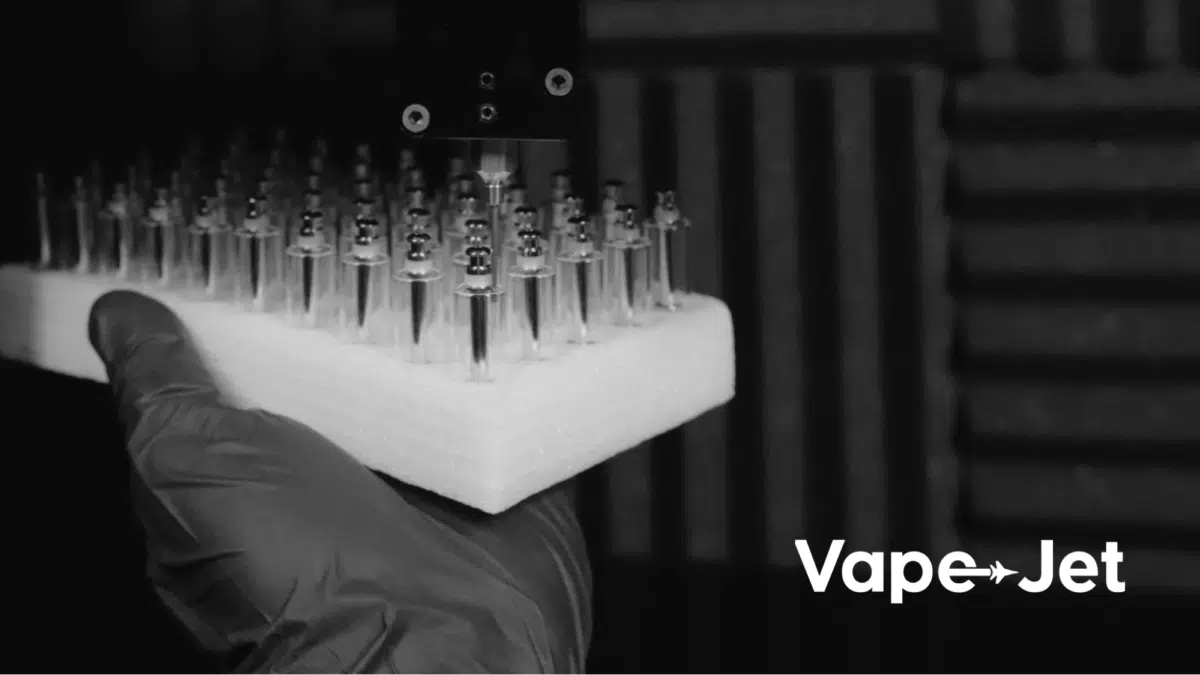
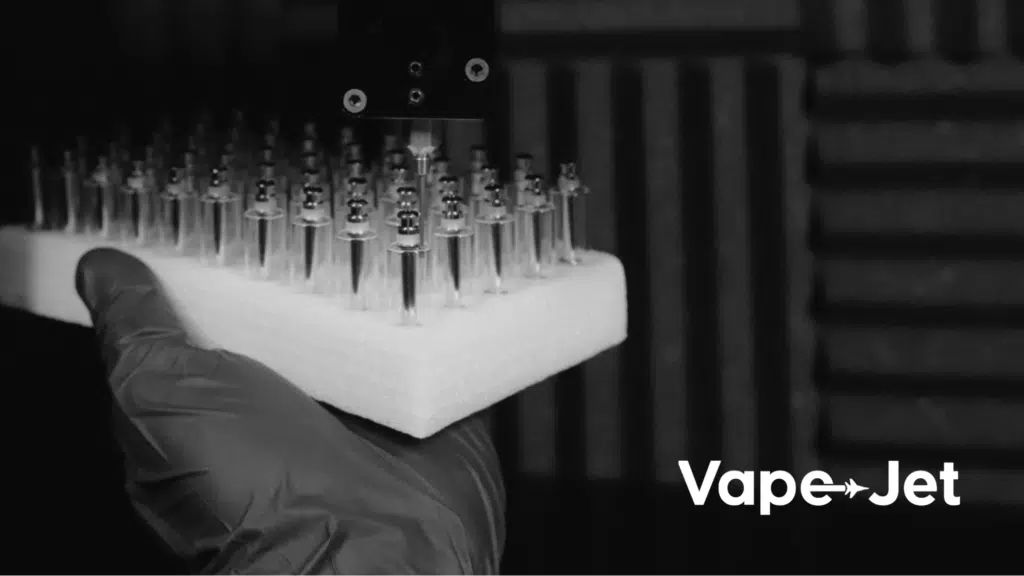
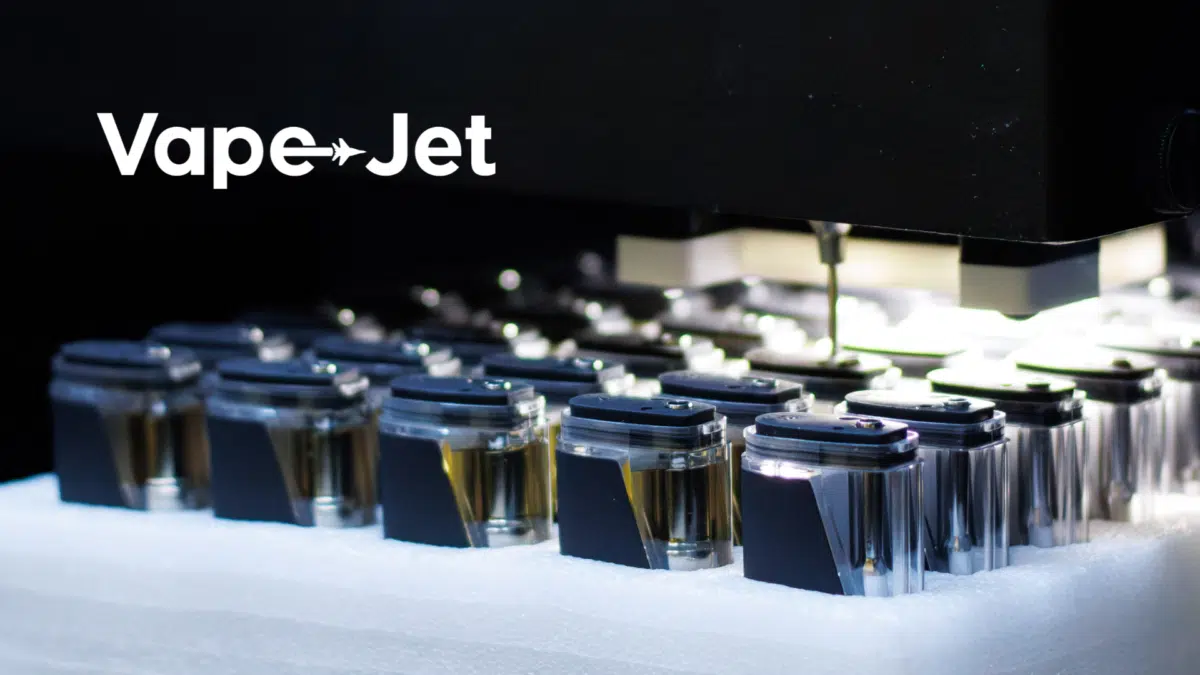
Vape-Jet offers operators an advanced user interface paired with cutting-edge software and a powerful central processing unit to automate cartridge filling. To fill cartridges, rather than using hand-eye coordination, the proprietary machine vision alignment system analyzes whole trays of vape cartridges, aligns the needle overhead, and precisely fills each one to the optimal level.

3. Reassembling 

Carefully reassemble the carts by attaching their mouthpiece or securing other parts of the device or cartridge. 

4. Prime the Vape Cart

On the consumer side, priming a vape cartridge after filling ensures optimal performance and prevents dry hits. To do so, first let the filled cartridge stand upright for up to 30 minutes, allowing the oil to saturate the wick thoroughly. Next, take a few dry pulls (inhaling without activating the battery) to draw oil into the coil. 

When ready to vape, begin with short, gentle puffs at a low voltage setting. This gradual approach helps avoid burning the wick and allows the heating element to warm up properly. 

As you use the cartridge, gradually increase puff duration and voltage if desired. Proper priming enhances flavor, prolongs cartridge life, and provides a smoother vaping experience from the first hit.

Mistakes to Avoid


Again, mastering the art of filling carts isn’t just about knowing what to do; it’s also about knowing what not to do. So, before you go, here are the top mistakes to avoid when learning how to fill a vape cartridge. 

Overfilling 


Overfilling is a critical mistake to avoid when filling vape cartridges, as it can lead to numerous issues affecting product quality and user experience. When a cartridge is overfilled, the excess oil can seep into the central airflow tube, causing clogging and impeding proper vapor production.

This not only wastes valuable product but also risks leakage, which can damage the battery or create a mess for the user. Overfilled cartridges may also experience pressure buildup as the oil heats, potentially causing the cartridge to crack or leak during use.

Furthermore, excess oil can flood the coil, leading to gurgling sounds, spit-back of hot oil into the user’s mouth, and uneven heating that affects flavor and potency. To prevent these issues, it is crucial to follow the manufacturer’s recommended fill line or leave adequate headspace (typically 2-3mm) at the top of the cartridge. 

Using the Incorrect Liquid


As we mentioned earlier, the consistency of the liquid or oil you use for filling carts will affect its efficacy. So, using an incorrect liquid with an undesirable consistency is a mistake you’ll want to avoid. Using the wrong liquid or consistency can cause the vape cart to clog or “spit” by losing material from the mouthpiece, frustrating the consumer. 

Can you fill a cart with a dab?

In general, extracts used for dabbing are not ideal for filling carts. Dabs are often thicker in consistency, allowing the consumer to pick them up on their metal dabbing tool and play on their rig of choice. This consistency is not ideal for filling a cart.

Not Priming

As a consumer, it’s always best to prime your vape cart or all-in-one vape device before using it. Again, as we explained, this helps enhance flavor, prolongs cartridge life, and provides a smoother vaping experience. If you believe your brand’s consumers are unaware of the benefits of priming, consider adding a blurb on your packaging or an insert to explain further. 

Ignoring Safety Precautions


In any job, ignoring safety precautions is always a mistake. Safety should also be the top priority when filling vape cartridges. Always work in a clean, well-ventilated area to minimize exposure to fumes. Wear appropriate personal protective equipment, including nitrile gloves and safety glasses, to prevent skin contact or accidental splashes. 

Lastly, be cautious of static electricity, which can ignite flammable terpenes; use proper grounding techniques when necessary. 

How Vape-Jet’s Automatic Cartridge Filling Machine Helps

From what you’ve learned here today, you can see why “how to fill a cartridge with a syringe” is an outdated inquiry for cannabis brands today. In the fast-paced and competitive market, brands must stay ahead of the curve when it comes to technology to stay ahead of the competition. 

Like those made by Vape-Jet, automatic cartridge-filling machines are ideal for learning how to fill vape cartridges efficiently and profitably. From fully automatic to semi-automatic vape filling and even dab dispensing capabilities, Vape-Jet is the premier source for AI—and tech-powered vape-filling solutions. 
Learn more about the Vape-Jet difference, or explore even more vape resources and education. Ready to get filling carts? Get in touch with our team to begin exploring Vape-Jet for your brand.

Categories
General

Live Resins, Rosins, Wax, Budder, and More: What to Know about Concentrates Types

Few industries today are more exciting and ever-evolving than the current cannabis industry. From vape carts to pods, all-in-one devices to baller buckets, there’s a fresh product or twist on an old favorite nearly every time a consumer steps through a retailer’s door. 

So, what should you know about the most popular concentrate types for extractors or consumers? Consider this as your guide to all things concentrates. 

Here, we’ll cover all the basics of the best concentrate types, including live resin, rosin, wax, and budders. Keep reading to brush up on all the key differences, explore what’s new across the industry, or learn for the first time as a novice.

Getting To Know The Different Concentrate Types

At their core, concentrates refer to the extracted or “concentrated” oil from cannabis plants. The plant’s flowers are coated in trichomes, bulbous and resinous heads containing a concentrated amount of cannabis’ precious compounds – such as cannabinoids (like THC and CBD) and terpenes. This oil is extracted through various methods (which differ from concentrate types), resulting in varied end-products. Like the ones we’ll learn about next.

Types Of Concentrates

Concentrates provide consumers with a highly potent and premium product to enjoy. Various concentrate types allow consumers to pick and choose which best suits their unique preferences and routines.

Since the market shows no signs of slowing down, with the Brightfield Group, a cannabis analytics firm, projecting it to reach $3.2 billion in 2024 (up from $2.4 billion in 2022), it’s wise to learn as much as you can about extracts to capitalize on their growth. 

To catch you up or clue you in, here are four of the most popular concentrate types in 2024.

Live Resin

The term “live” can be used with resin or rosins and refers to the flower material used for extraction. Rather than using dry, cured flower material post-harvest, the material is immediately frozen, capturing the plant’s essence at the peak of its freshness, hence its “live” nature.

The resin classification simply notes that the concentrate was extracted using solvent-based versus solventless methods. Live resin is most commonly extracted with CO2 or a hydrocarbon blend. Rest assured, the solvents are purged before the end product to ensure the extract is safe. 

Live resins (and rosins) are most commonly strain-specific or made from one cannabis strain to provide the consumer with the purest form of enjoying the plant’s cannabinoids and terpenes.

Rosins

Conversely, rosins are solventless extracts that extract the trichomes from plant material using temperature and pressure. Rosin presses use heat to press flower material to separate and collect the oil from the flower without using solvents. 

Because some solvents are used with solvent-based methods (like butane and ethanol), they are considered harmful, but rosin is considered the cleanest concentrate type overall. 

Rosins can also be “live,” where the material is freshly frozen upon harvesting.

Wax

Wax refers to a concentrate type that is, no surprise, wax-like in consistency. It’s typically made with solvent-based extraction methods, like BHO, and has a soft, sticky texture that’s ideal for dab pens or dab rigs.

Budder

Again, like wax, budder refers to a concentrate’s end texture or consistency. It relates to concentrates that are more “buttery” or creamier versus other varying types, like shatter (which is translucent and pliable) or crumble (which is drier and more crumbly).  

The key to the budder’s unique texture is the whipping process. After the solvent is purged, the extract is whipped at a specific temperature. This agitation incorporates air and changes the consistency to a creamy, buttery texture.

How To Use Them 

As innovative as concentrates can be, so are the ways you can use them for consumption. Here are the top ways consumers today are using concentrate types.

Vape Pens or Devices

Piggybacking off of nicotine vape’s popularity are cannabis vapes. These vape devices, whether a 510 cart filled with concentrate, an all-in-one-device or a “disposable” vape, are the most popular with Gen Z and Millennial generations, who make up 70.8% of all vape pen sales based on data from Headset.

Dabs

Dabbing or dabs is the act of flash vaporizing cannabis concentrates with the use of a dab rig, an electronic rig, or a dab pen. With a dab rig, consumers light the “nail” or “banger” of the rig, and when heated to the desired temperature, drop the dab inside with a metal dabber tool and inhale through the rig’s mouthpiece. 

The e-rigs work similarly but heat up electronically rather than using a torch to light the nail or banger. Dab pens contain a removable mouthpiece, where you can place the concentrate or “dab” inside, above the heating apparatus, and upon activating the pen to heat, inhale the vapor through its mouthpiece.

Infused Flower

Some consumers will use concentrate types to infuse their flower by adding them to their bowls, joints, or pre-roll cones, increasing overall strength.

Advantages

Cannabis concentrates offer consumers a few unique advantages, hence their growth in sales and popularity. 

  1. Higher potency: Concentrates often contain much higher levels of THC or CBD compared to flower, which can provide a stronger and more immediate effect.
  2. Efficiency: Because of their potency, a smaller amount of concentrate is needed to achieve the desired effects, making it more efficient in consumption.
  3. Variety of consumption methods: Concentrates can be consumed in various ways, such as dabbing, vaping, adding to edibles, or even infusing flower or pre-rolls.
  4. Discretion: Concentrates can be more discreet due to less odor and the ability to consume smaller amounts.
  5. Medical benefits: For medical users, the higher potency and rapid onset of effects can be particularly beneficial for managing certain conditions.

Extraction Methods

While we briefly discussed various extraction methods in our concentrate types sections, let’s dive deeper to understand each individually.

Solvent-based extractions

  • Butane Hash Oil (BHO): Butane strips cannabinoids and terpenes from plant material. The resulting product can be purged of residual butane to create various concentrates, such as shatter, wax, and crumble.
  • CO2 Extraction: This method uses carbon dioxide under high pressure and low temperature to extract cannabinoids. It is considered safe and produces a clean product, often used for vape cartridges and oils.
  • Ethanol Extraction: Ethanol is another solvent used to strip cannabinoids and terpenes and is often used to create tinctures and edibles.

Solventless extractions

  • Rosin Press: This involves applying heat and pressure to cannabis flower or hash to squeeze out the resin. This method is popular for its purity and simplicity, producing rosin.
  • Dry Sifting: Using fine screens to separate trichomes from the plant material, dry sifting produces the resulting product, kief, which can be further pressed into hash.
  • Ice Water Extraction (Bubble Hash): Involves agitating cannabis in ice water to separate trichomes, which are then filtered through screens of varying sizes to produce bubble hash.

Hydrocarbon Extraction

  • A combination of hydrocarbons (e.g., butane and propane) can be used to extract cannabinoids and terpenes. The process is similar to BHO, resulting in products like live resin.

Distillation

  • Involves heating the cannabis extract to separate cannabinoids by their boiling points. This method produces highly pure and potent distillate, often used in vape cartridges and edibles.

Supercritical Fluid Extraction

  • Supercritical extraction uses supercritical fluids (e.g., supercritical CO2) to dissolve and extract cannabinoids. This advanced and precise method is often used for high-quality extracts.

Choosing Concentrates

Choosing which concentrate type is best for you, consumption-wise will be subjective, based on your unique tastes, preferences, and needs. A few factors that may weigh in on your decision include – 

  1. Medical or recreational use: This can help determine what type of cannabinoids to seek out, i.e., higher concentrations of CBD for certain conditions or higher concentrations of THC for recreational or social use. 
  2. How you’ll consume: If you don’t have a dab rig or any flower to infuse, you’ll want to choose an all-in-one device that includes the heating apparatus required to consume. 
  3. Your skill level: If you’re new to consuming, it’s best to go low and slow with concentrate types due to their potency. Since dabs require rigs or e-devices that are pretty costly, it might be best to stick to vapes until you’re ready to upgrade. 
  4. Budget: Concentrate types can vary significantly in cost from market to market, brand to brand, and type to type. Ultimately, choosing the concentrate type that’s best for you might come down to what you can afford. 

As for extractors, choosing the concentrates you produce will vary depending on the market in which you operate, the types of flower or strains you have access to, the equipment or extraction method you’ll use, and the type of end-product you plan to produce (dabs, versus carts, disposables, etc.).

Quality And Safety Considerations

When buying cannabis concentrates legally, the state’s testing requirements ensure the type is safe to consume. Every concentrate and cannabis product is subject to rigorous testing to ensure it is free of contaminants, pesticides, and other materials, like heavy metals, etc. 

As for quality, research online reviews, ask a trusted budtender, or try the product to see if it meets your requirements (e.g., aroma, potency, consistency, etc.).

Final Thoughts About Concentrate Types

As you can see, concentrate types are ever-evolving and aren’t a fleeting trend. Dabbing and vaping are two of the most popular consumption methods, and the product category is expected to continue to grow. That means if you’re an extractor, competition will only continue to grow, too. 

Optimizing your jar-filling and device-filling game will be crucial to standing out amongst the crowd with a premium, quality product and turning a profit by making your processes that much more efficient. 

Cut down on product losses, preserve concentrate terpenes and cannabinoids, and fill better with Vape-Jet. Learn more about our collection of products that support various concentrate types and leading extractors across the US.

Categories
General

Extract Decarboxylation for Better Vapes

Understanding decarboxylation and how it affects extracts is crucial to vape products’ overall quality and brand loyalty. In fact, a commonly asked question of our team is, “How much decarb loss can we expect with our live resin/rosin?” 

To answer, we’ve put together the ultimate guide to extracts and decarboxylation. Here, we’ll cover all the basics, like the definition of decarboxylation and how the process affects extracts. In addition, we’ll dive deep into what type of decarb loss to expect and how to maintain optimal environments for terpene preservation.  

So, next, let’s get into decarboxylating, a.k.a. decarbing. 

The Decarboxylation Process for Extracts 

Generally speaking, decarboxylation is a chemical reaction that removes a carboxylic acid group from a molecule. For cannabis extracts specifically, when THCa converts to THC upon applying heat, the carboxylic acid group transforms into CO2 gas. Put another way, each molecule of THCa that decarboxylates, degrades into one molecule of THC and one molecule of CO2 gas.

Most of these CO2 molecules bubble out of the extract naturally during the decarb process. However, some will remain in the extract solution and must be removed before filling cartridges, a process called degassing. To do so, extractors must manually agitate the solution to allow the dissolved CO2 to form bubbles and pop; degassing prevents what’s known as “champagne” cartridges—you know, the ones with “bubbly” inside. 

If not degassed after decarb, the oil can foam out of the cart when filling cartridges. This is due to the leftover CO2 bubbling out of solution since it’s naturally agitated while moving through the pump. 

How Decarboxylation Affects Extracts 

Of course, that’s just the underlying basics of decarboxylation for extracts. Beyond ensuring your extract is decarbed for efficient filling, optimal decarbing conditions are essential for ensuring customer satisfaction. 

As we mentioned previously, decarboxylation is the process responsible for changing THCa in an extract into THC. This is an especially crucial step for all-in-one vapes or vape cartridges, as THCa will crystallize if it is above 50% by weight. Once it’s crystalized, it will clog the vape, leaving it otherwise unusable. Likewise, if the oil is too hot or exposed to too much air during decarb, undesirable degradations and losses can occur to the terpenes creating a bland or burnt flavor when vaped; maintaining gentle heating and low oxygen exposure during decarb ensures a tasty vape experience for the consumer.

For Vape-Jet, formulations must be more than 90% decarboxylated to produce a suitable cartridge. If it is not decarbed enough, the heat required to thin the oil sufficiently to pump it into the vape will begin to decarb the oil inside the machine. This will create those bubbles of CO2 inside the cartridge, which cause spills and product loss, or undesirable “champagne” cartridges. All of which can affect an extractor’s bottom line and brand loyalty. 

What to Expect: Decarb Loss with Extracts 

Decarb loss with extracts formula

Wondering what to expect from decarb loss with your brand’s extracts? We did the math for you, showing the theoretical maximum loss due to decarboxylation alone. For this part, we’ll assume we’re starting with 100% pure THCa isolate.  

Each mole (a quantity of stuff, not the cute burrowing animal) of THCa weighs 358.478 g, each mole of THC weighs 314.469 g, and each mole of CO2 weighs 44.009 g; the weight of THCa minus the weight of CO2 equals the weight of THC. The maximum theoretical loss due to decarboxylation can be calculated as follows:  

44.009 g CO2/358.478 g THCa = 12.3%

This means that if you completely decarb and degas pure THCa, you will have only THC left and it will weigh 12.3% less than when you started.

In reality, your starting extract destined for high-quality vape cartridges will have lots of other cannabinoids, terpenes, and everything else that makes a full-spectrum vape cartridge so desirable and command a premium price; luckily, most extracts come with a Certificate of Analysis (COA) for cannabinoids (a total terpene analysis will be nice to have too!).

Since extracts are predominantly THCa, we’ll go ahead and ignore the other cannabinoids for this next part, but it’s worth noting that THCa isn’t the only cannabinoid that can be decarboxylated.

Decarboxylation of THCa will never reach 100% without distilling the extract, so 90% of the theoretical maximum decarboxylation is a good target; put another way, shooting for 12.3% losses isn’t practical for full-spectrum vape cartridge oil formulations, we’re aiming for 11.07% decarb loss to CO2 (90% of the maximum) for live-resin, live-rosin, or any full-spectrum extract. 

To start, weigh your extract before decarboxylation and multiply that mass by the percentage of THCa to get the total starting amount of THCa; we’ll assume the starting COA says it contains 75% THCa by weight. Taking 11.07% of the total THCa content will give you the mass you’re targeting to lose to achieve 90% decarboxylation; after decarboxylation and degassing, weigh the extract again to get the finished mass. The difference between the starting mass and finished mass will be mostly due to CO2 leaving the extract. 

Now, the example calculation to break down the math a bit further. 

Example calculation: 

Starting extract mass: 1000g

THCa content from COA: 75%

Starting Mass of THCa: 1000g * 75% = 750g 

90% of maximum loss of CO2: 750g * 11.07% = 83.025g 

Finished extract mass target: 1000g – 83.025g = 916.975g 

Optimal Environments for Terpene Preservation 


Another factor to consider when producing an elite vape product is the preservation of terpenes. Terpene preservation is always a losing proposition; even the best genetics, best growing conditions, and most gentile extraction techniques will never result in a terpene profile that is precisely true-to-strain-as-grown inside a vape cartridge, but each step in the process offers the opportunity to at least prevent unneeded terpene loss and degradation. 

Decarboxylation will also affect the extract’s finishing terpene composition to varying degrees, depending on the temperature the process is performed at, the duration of the process, and using a lid vs. no lid. Aleks Zed at Hashtek is putting in the work to elevate everyone’s game with Open Source research into all things hash, and we were super stoked to see his results on this very topic. Please read his findings in full at Hashtek.ca for a deep dive into the crucial question of pressurized vs. atmospheric decarb (i.e. lid vs. no lid). 

TL;DR: terpenes are best preserved during decarboxylation with low temperatures and high pressures in the absence of oxygen. 

So, with all the care taken to grow, extract, and process your extract to preserve as much of those lovely terpenes as possible in preparation for making vape cartridges, you wouldn’t want your vape cartridge filler to foul all that hard work. Vape-Jet helps extractors retain their terp-forward extracts by providing optimal environments for terpene preservation, such as three independent heat zones and a nitrogen-pressurized fluid path for filling. The nitrogen pressure not only allows the heaters to operate at low temperature, but the nitrogen displaces oxygen from the reservoir; low temp and low oxygen are the keys to efficient vape cartridge filling, yielding high-quality flavor as true-to-strain-as-possible for the consumer. 

Vape-Jet: A Filling Solution for Premium Extracts 


In the competitive cannabis industry, standing out among the crowd is as crucial as decarbing. At Vape-Jet, it’s our mission to boost extractors’ success by providing expertly crafted, field-tested, and AI-powered vape-filling products for ground-breaking service and support.  
Take the first step towards revolutionizing your brand’s reputation through a renewed commitment to innovation. Explore Vape-Jet for your cannabis extracts and vape products

We use cookies to improve our user experience. By using our site, you consent to the use of cookies. Read More