In August of 2026, ASHE vapes were subject to one of the largest recalls by the California Department of Cannabis Control.
Unlike other recalls, this wasn’t due to unsafe pesticide levels or contaminated material. It resulted from improper testing and labeling.
This represents the importance of cannabis compliance beyond the product.
Something completely controllable was missed; as a result, ASHE not only lost profitable SKUs pulled from shelves but also faces irreparable brand damage.
But ASHE isn’t alone. So many operators don’t take compliance seriously until it costs them.
This guide helps break down the cost of cannabis product recalls for vape manufacturers to help you prioritize cannabis compliance from the filling station to shelves.
Why Cannabis Product Recall Risk Is Growing
As your volume grows, so does your risk for cannabis product recalls, especially when operating in more than one state.
Each state has its own testing and compliance requirements, making it even harder to navigate and follow individual rules and regulations.
Even more, stricter lab standards across the board and complex protocols to follow, like rapid retail quarantining, make cannabis manufacturing compliance that much more challenging.
The most vulnerable areas of quality control cannabis supply chain-wide include:
- Contaminant/pesticide failures: A batch fails safety testing for contaminants like heavy metals or pesticides above allowed thresholds.
- Potency variance: When actual cannabinoid content falls outside permitted specifications or doesn’t match the label, a cannabis compliance red flag is raised.
- Mislabeling: Mislabeling of dose, potency, ingredients, warnings, or other required information can trigger a cannabis product recall, as shown by the ASHE example from the introduction.
- Unverified inputs: When a banned chemical was found to be present in a Michigan live rosin product in 2026, the brand was responsible for retrieving and disposing of all affected inventory. The same goes for other failed cannabis compliance testing when unverified inputs or ingredients are found without verification.
- Incomplete batch records: If you can’t use your cannabis track and trace system to accurately pinpoint affected products, you could face further recalls and compliance issues.
Regardless of the cannabis recall trigger, each example highlights the importance of batch-level tracking to pull affected products.
A Recall Costs More Than the Inventory You Lose
The product loss from recalls is only the start of what you’ll lose. You’ll lose time, labor, and effort collecting the recalled product on an emergency basis, and then you’re responsible for retesting, investigating the issue, and responding to regulators.
Beyond the products, your brand equity is negatively affected too, through:
- Retailer/distributor disruption
- Lost sales or shelf placement
- Long-term damage to retailer and consumer confidence
Tracking the affected product matters. If you can isolate the batch, the affected radius is smaller than if you can’t.
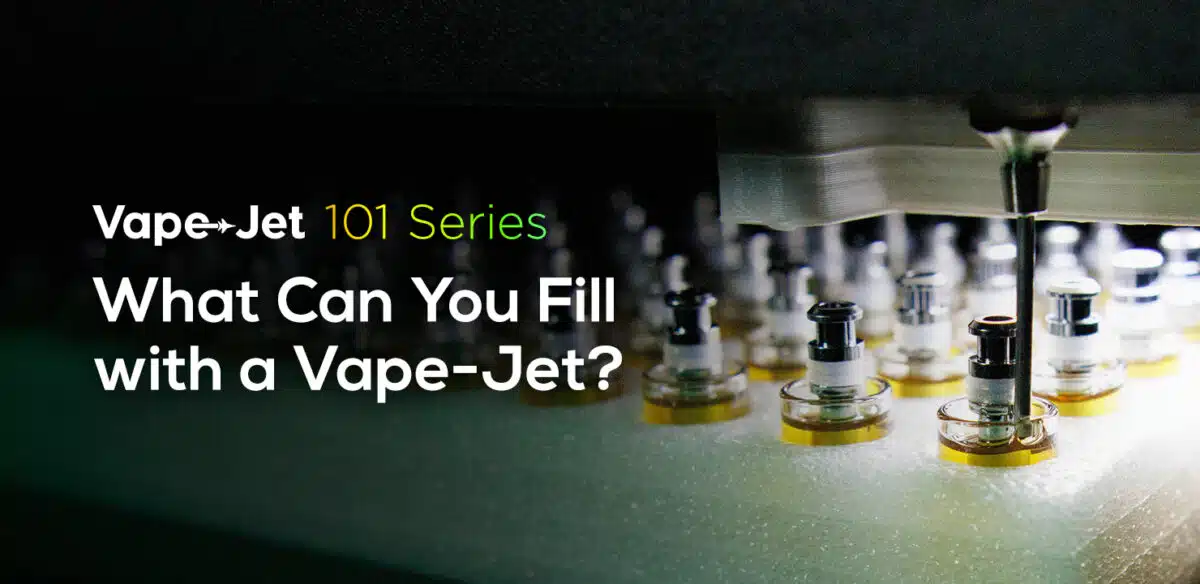
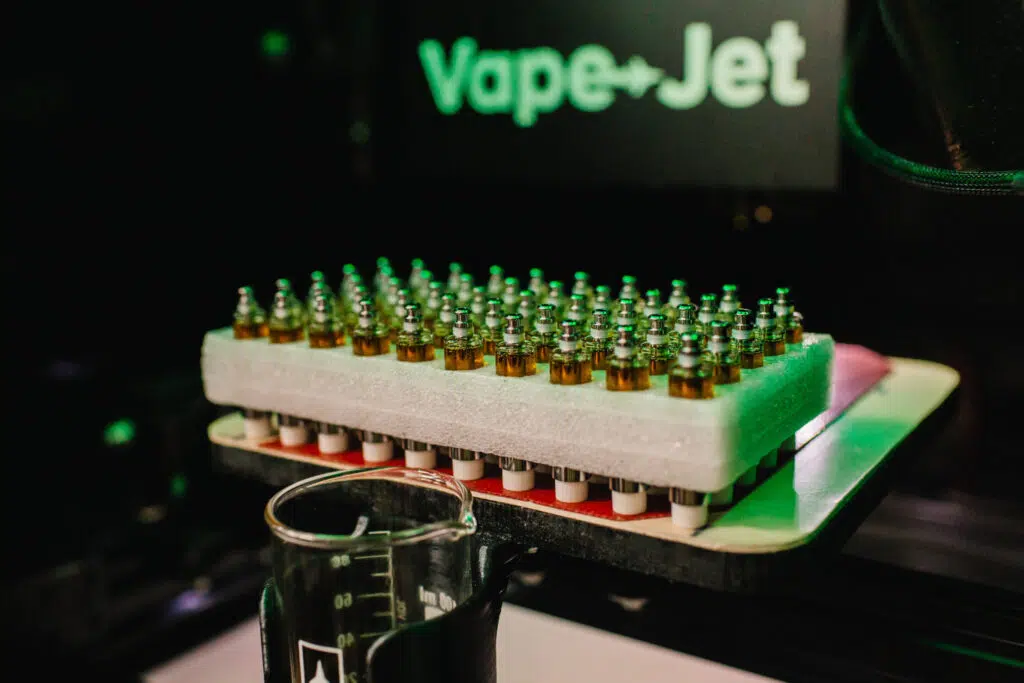
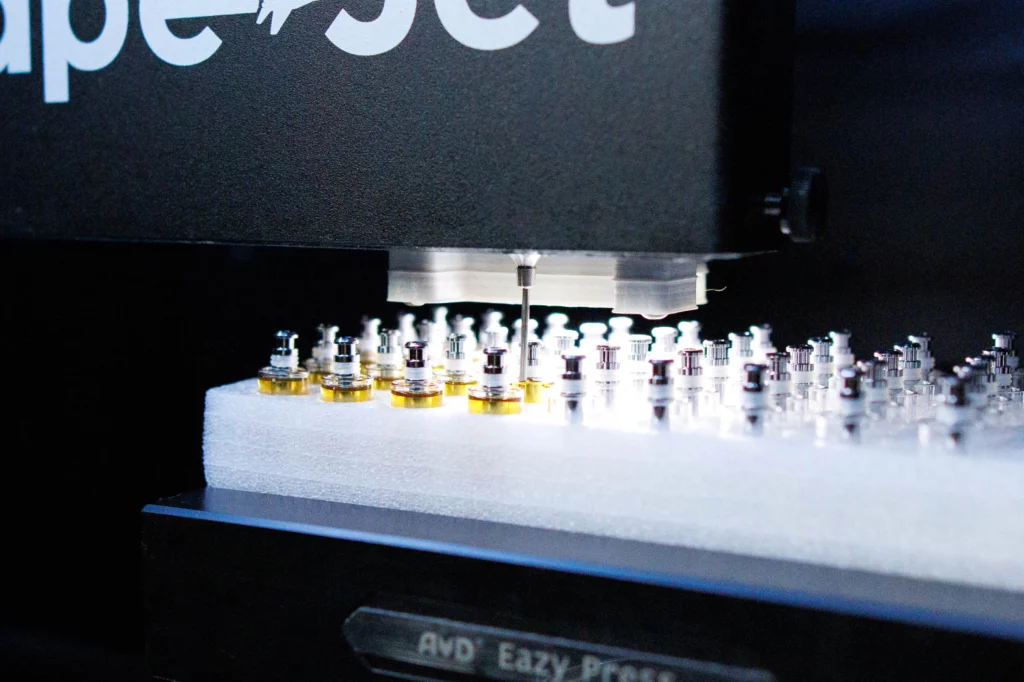
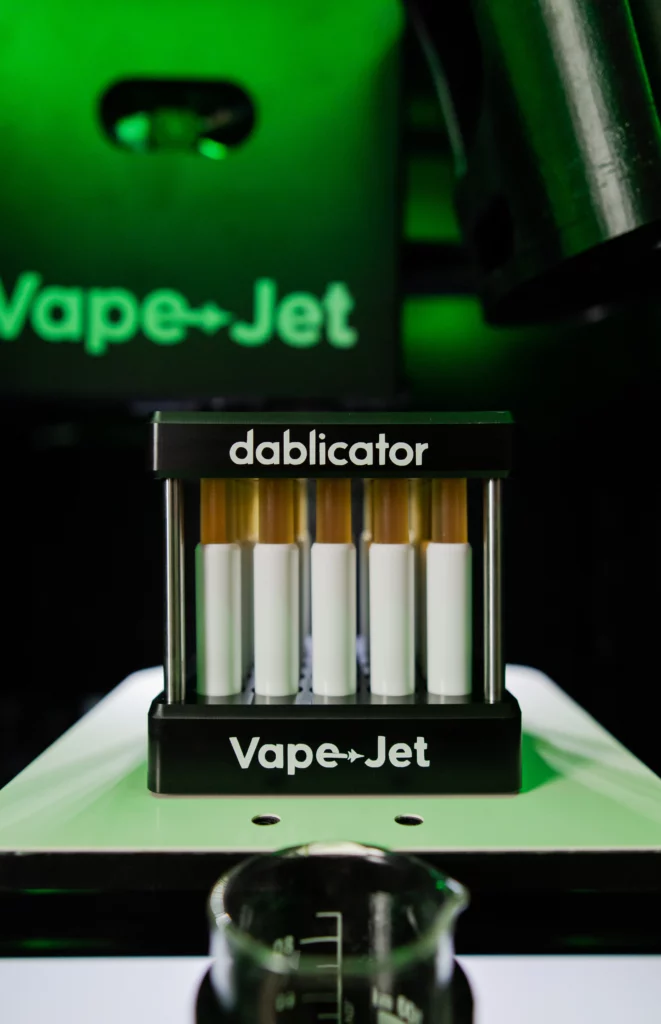
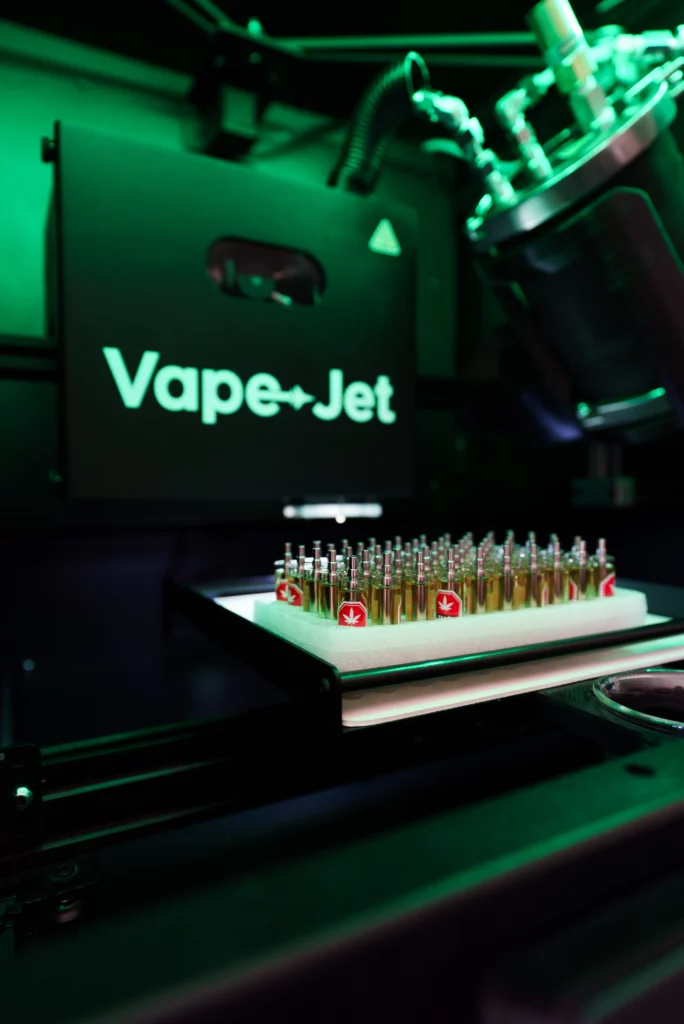
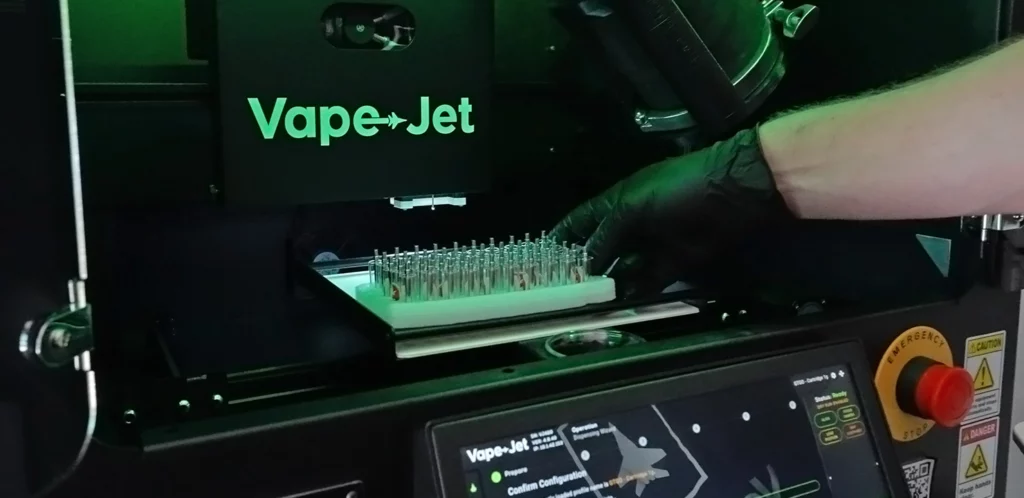
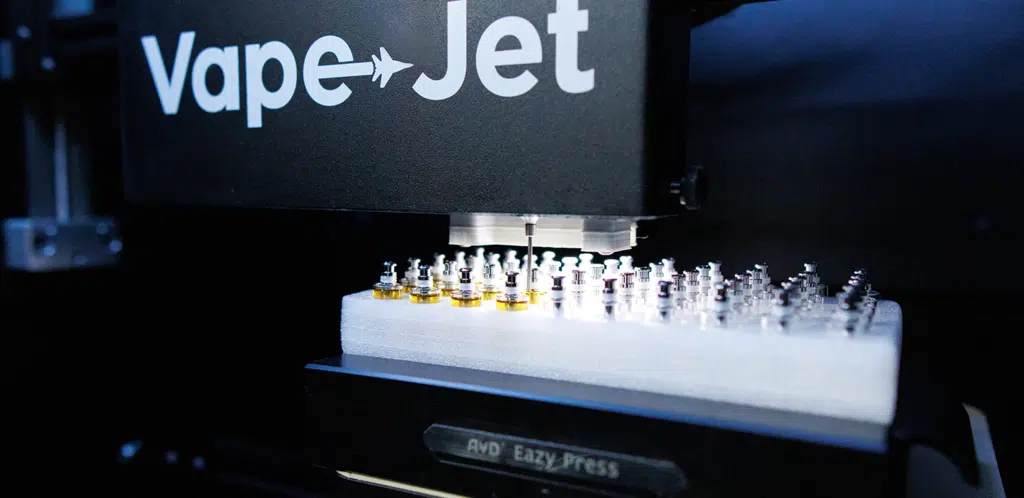
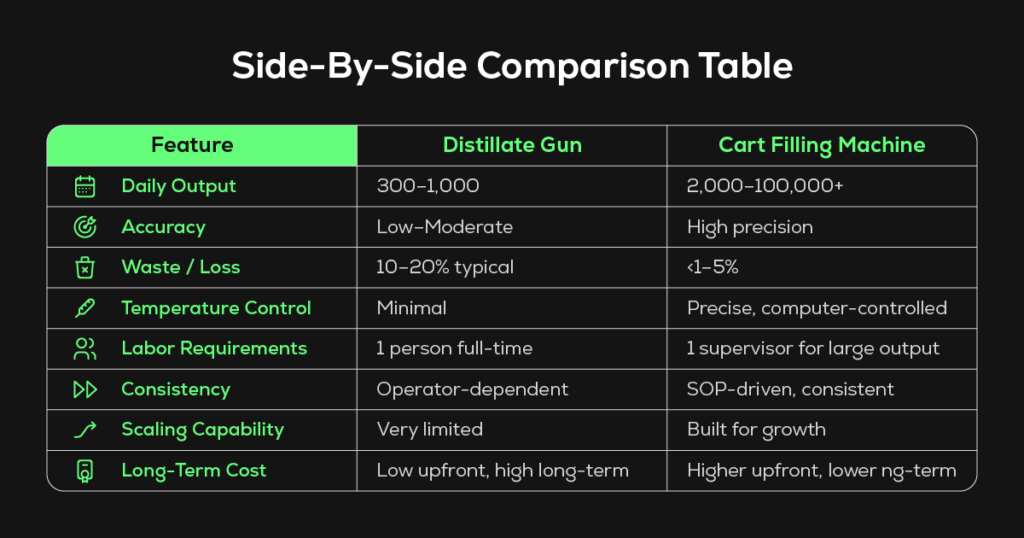
Vape cartridge filling machines help. Most machines that monitor fill accuracy to avoid labeling infractions and log batches for audits protect users better than those without.
What a Cannabis Product Recall Actually Costs, Line by Line
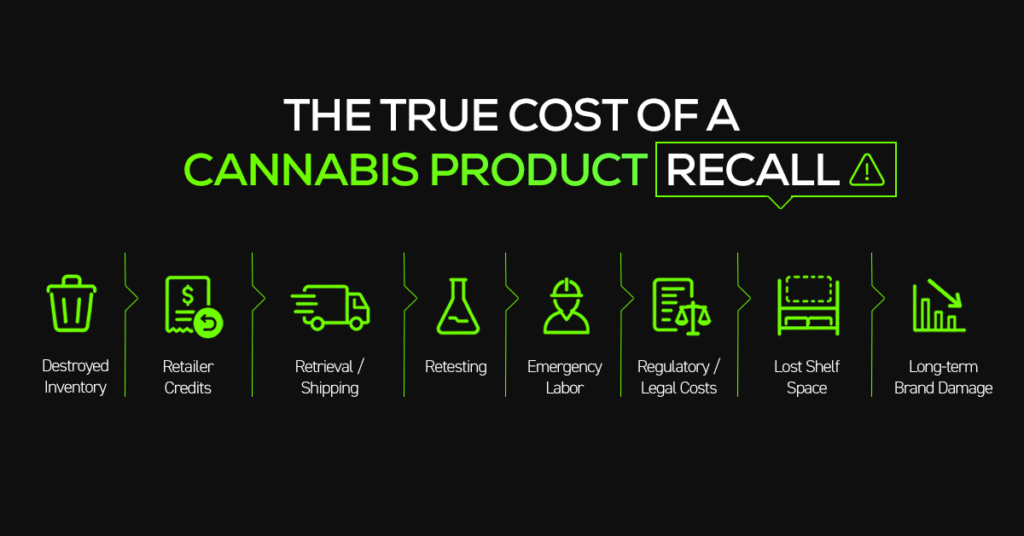
On the surface, a cannabis product recall may not seem that bad. But when you break down what each cost can include, it’s much more than it appears.
| Recall Cost | What It Can Include |
| Destroyed inventory | Finished cartridges, oil, hardware, packaging, and other affected products that can no longer be sold. Think about this in terms of wholesale value to get the entire picture, not just raw-material cost. |
| Retailer chargebacks & credits | Refunds, credits, or reimbursements owed to retailers and distributors for recalled inventory already shipped or stocked. |
| Return shipping & retrieval | Freight, courier fees, handling, and labor required to locate and recover product across the distribution network. |
| Re-testing & investigation | Additional laboratory testing used to identify the source of the failure, confirm affected lots, or clear adjacent batches. |
| Emergency labor | Unplanned hours from QA, compliance, production, operations, and leadership teams working on quarantine, reconciliation, communication, and corrective action. |
| Regulatory response | Time and resources spent compiling records, responding to regulators, documenting corrective actions, and meeting recall or quarantine requirements. |
| Legal expenses | Outside counsel, product-liability review, contract disputes, or other legal support resulting from the recall. |
| Lost shelf placement | Sales lost while the SKU is unavailable, plus the risk that a retailer fills the space with another product and does not immediately restore the recalled SKU. |
| Long-term brand damage | Lost retailer confidence, consumer hesitation, and future sales impact that can continue after the immediate recall is resolved. |
In real time, this can mean up to $3M in damage, as shown by Missouri Delta Extraction and their 2023 enforcement action, which included $2M in unusable inventory and $1M+ in stalled product from 4,500+ quarantined units.
Fill Accuracy Is a Compliance Control
Fill accuracy is one of the most vulnerable areas, not only for quality control but also for compliance.
Underfilling, even at .92 g in a 1.0 g cart, technically constitutes mislabeling. This can happen whether manually filling or using semi-automatic or automatic cart filling equipment, but know that the filling method you choose affects weight accuracy in different ways.
Volumetric systems dispense based on a set volume, while gravimetric verification checks the cartridge’s actual weight after filling. What complicates the decision and process is that extract behavior can shift when process or environmental conditions change.
For instance, thermal degradation during filling can alter the cannabinoid profiles as tested post-COA. So not only can the pump and nozzle system affect filling, but the extract fluid path can too.
Temperature changes can also affect viscosity, causing extracts to expand or contract and affecting filling accuracy and overall cannabis manufacturing compliance.
Controlling temperature throughout the fluid path helps maintain predictable flow without exposing the extract to unnecessary heat. For manufacturers, that makes fill accuracy a system-level issue, not simply a function of the pump or nozzle.
Your Audit Trail Decides How Wide the Recall Goes
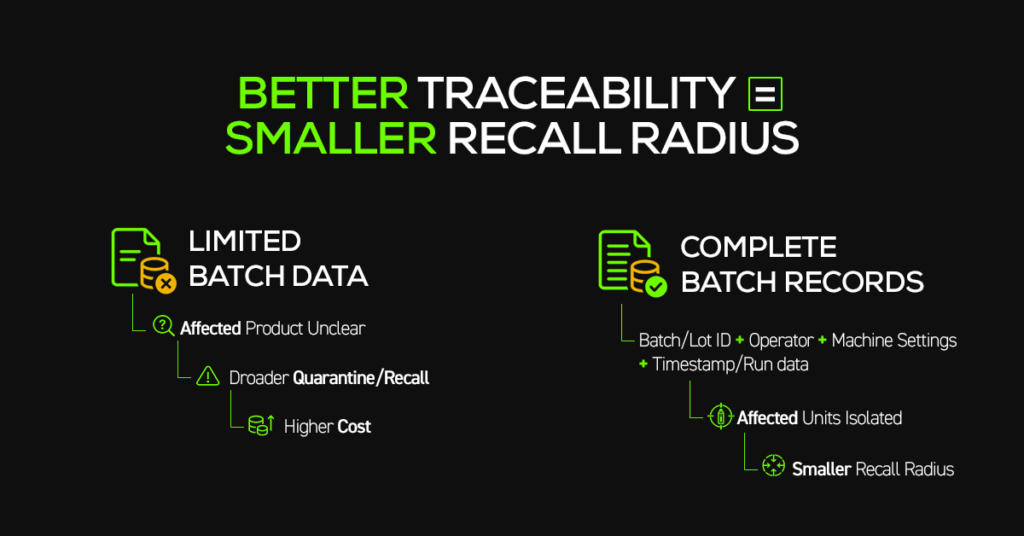
The more you can prove there’s a limited batch affected, the shorter your audit trail will be. That’s another advantage of advanced vape cartridge filling equipment with integrated software and batch record-tracking tools, beyond just filling consistency.
Precise batch data helps operators isolate affected units. On the flip side, incomplete records or untrackable SKUs can force facility-wide product recalls, increasing risk and damage.
Equipment with cannabis track-and-trace tools maintains production records, linking batch or lot IDs to operator activity, machine settings, timestamps, and other run data.
The more complete the record, the easier it is to determine which units were produced under the same recallable conditions and which were not.
Cannabis Manufacturing Compliance: The Failures That Trigger Recalls
Many incidents that trigger a cannabis product recall can be traced back to controls that break down somewhere upstream. For instance, cross-contamination risks increase when equipment is hard to clean or doesn’t have automated cleaning procedures.
Potency variances can result from inaccurate dispensing, as can underfills, which can lead to mislabeling.
And finally, documentation gaps are the final layer of exposure for cannabis recall risk. Without automated logs that preserve production records, you expose your operation to the risk of a full facility audit or recall.
Altogether, each control throughout the vape filling process is just as much about hardware performance as it is cannabis manufacturing compliance.
The goal is not only to produce consistently and efficiently but also to create a traceable process that makes deviations easier to identify, document, and contain.
The Best Cannabis Recall Plan Starts at the Filling Station
In the end, it’s not just the material that matters when it comes to cannabis compliance. The vape cartridge filling equipment you use can support you during a cannabis product recall, too.
Advanced equipment delivers precise dosing to prevent mislabeling and potency issues, plus automated audit trails that can help contain recall damage.
In other words, investing in the right cart filling machine can turn a potentially enterprise-threatening event into an isolated batch correction.
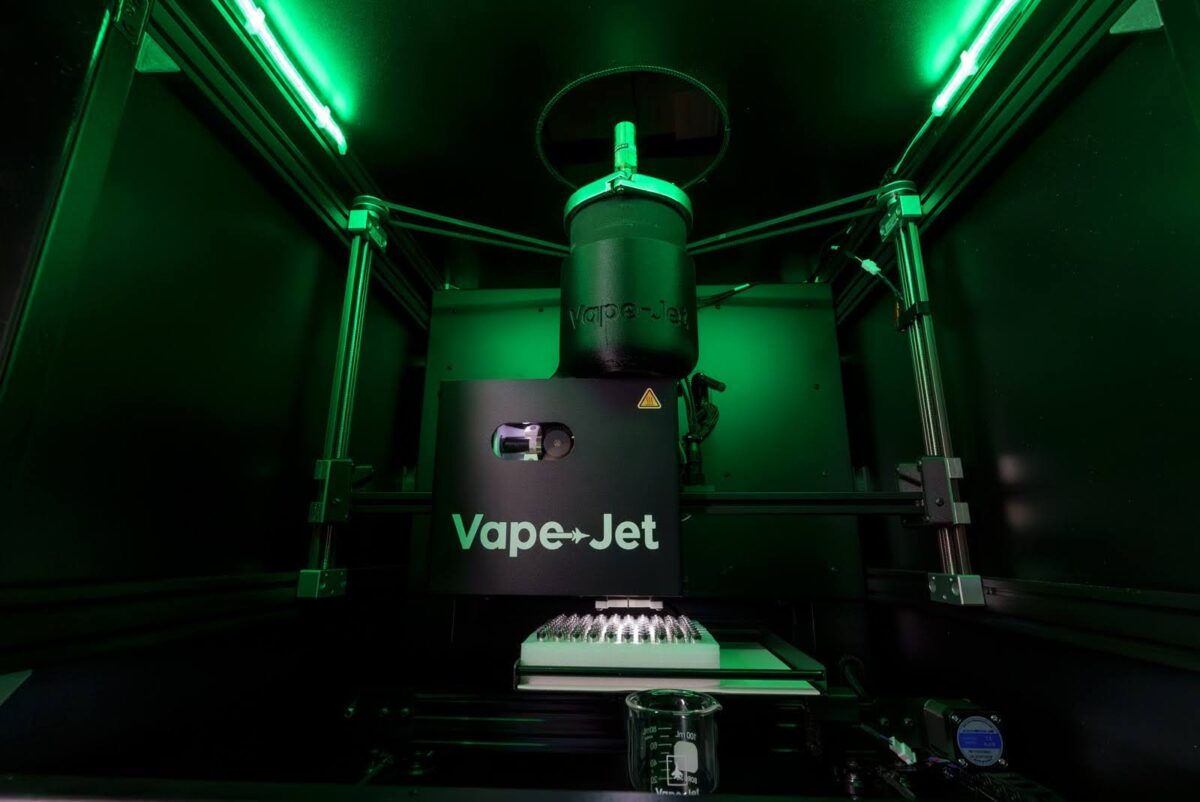
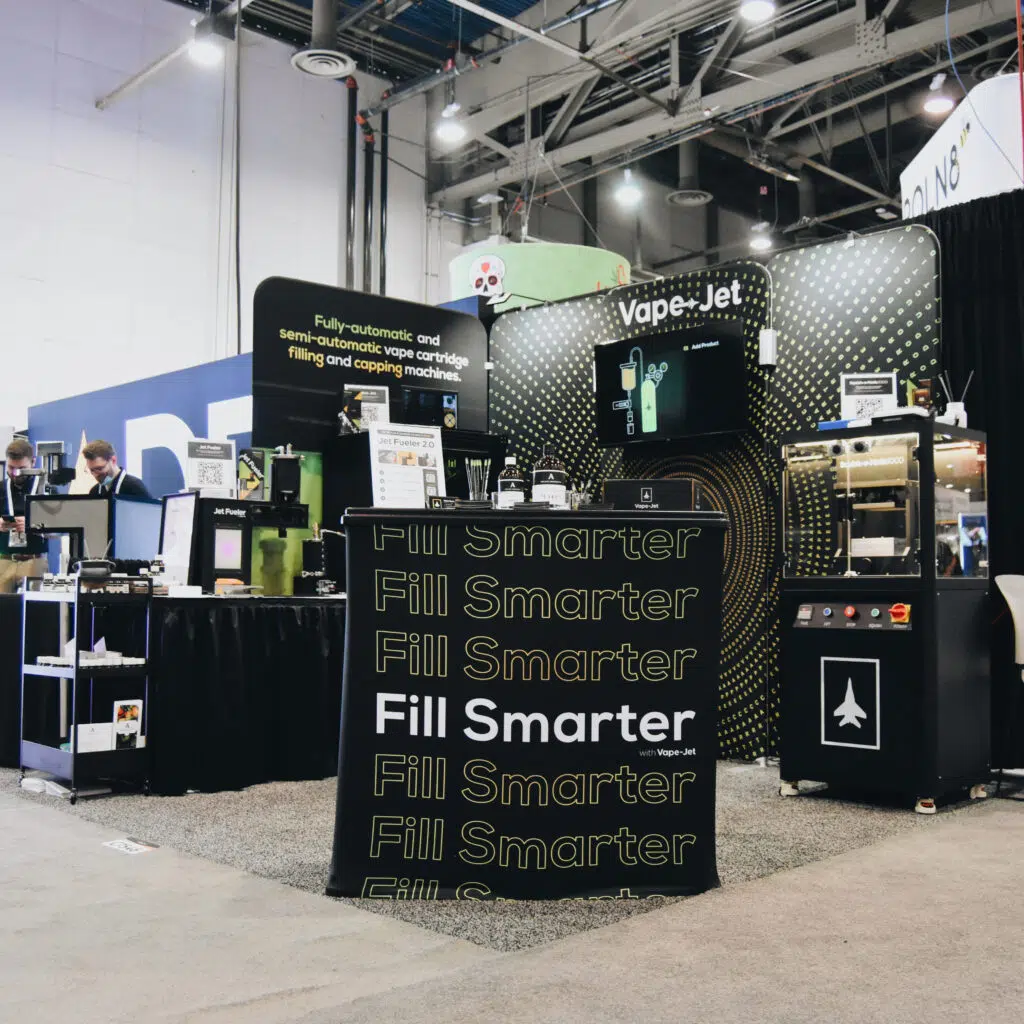
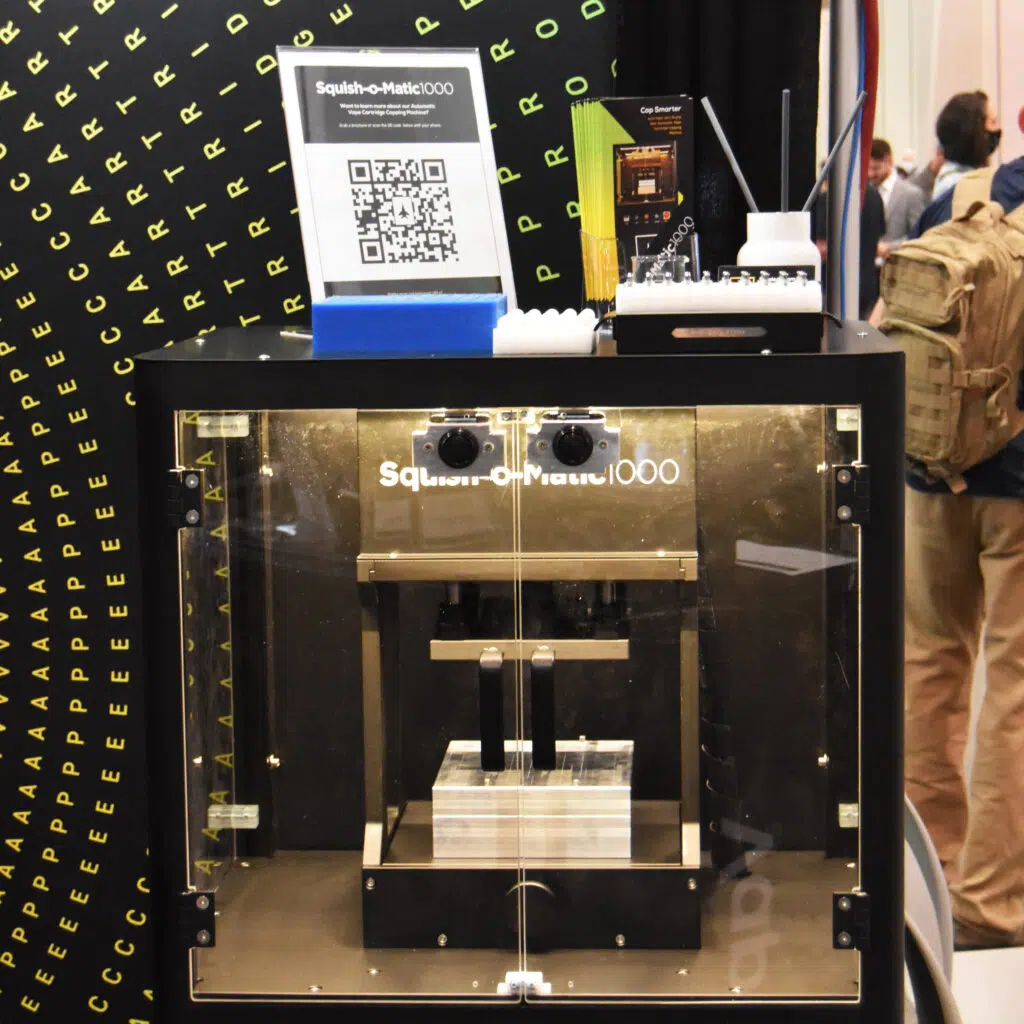
Protect your operation with industry-leading semi-automatic and automatic vape cartridge filling equipment from Vape-Jet. Explore our fleet of filling machines and accessories today.
Frequently Asked Questions: The Costs of a Cannabis Product Recall
To finish our ultimate guide, check out the most frequently asked questions on the costs of cannabis product recalls.
- What causes most cannabis vape cartridge recalls?
Cannabis vape cartridge product recalls are often caused by failed or noncompliant testing, contaminants, potency or labeling discrepancies, unverified inputs, and incomplete track-and-trace records.
- How much does a cannabis product recall cost?
There is no standard cost of a cannabis product recall. Expenses associated with product recalls include destroyed inventory, retailer credits, return shipping, re-testing, emergency labor, regulatory response, legal support, and lost shelf placement. The total cost will depend on how much product must be quarantined or recalled and whether records can isolate the affected batches.
- How quickly do you have to notify the state after starting a cannabis recall?
Recall notification requirements vary by state. For instance, in California, a licensee must notify the Department of Cannabis Control within 24 hours of initiating a recall, and any cannabis goods intended for destruction must then remain quarantined for at least 72 hours. Other states have their own requirements or guidelines, so check with the regulatory agency of your operating state for more details.
- Can a fill weight error trigger a recall?
Yes, a fill weight error can trigger a cannabis product recall when the amount actually dispensed causes the finished product to differ from its labeled quantity or potency requirements. State tolerances differ, so manufacturers should validate dispensing accuracy against applicable rules and testing results rather than relying solely on the machine’s programmed target.
- What records do cannabis regulators ask for during a recall?
The records that cannabis regulators ask for during a recall will vary but usually include batch or lot identifiers, track-and-trace records, testing results, production and inventory records, disposition records, and documentation showing where recalled products were distributed. California also requires recalled goods intended for destruction to be identified, weighed, and tracked through its track-and-trace system and onsite records.
- Does a recall in one state affect licenses in another?
No, a recall in one state does not automatically affect licenses in another state. Cannabis licenses and recall procedures are specific to each individual state, so a recall in one market does not by itself mean licenses in other states are recalled or suspended. Multi-state operators should still review each jurisdiction separately if the same product, ingredients, process, or compliance failure spans multiple licensed operations.