

Calculate the five-year cost of automating your vape cartridge filling operation with our free automation ROI calculator. Compare equipment purchase costs, filling labor, cannabis oil waste, rework, maintenance, and production capacity to understand how automation could affect your cost per cart.
Enter your facility’s actual production numbers or adjust the default assumptions to estimate ownership costs, compare filling methods, and identify potential savings before investing in new equipment.
No email required. Adjust the numbers and explore different production scenarios.
5-Year Cost of Ownership
Compare what your current fill process costs over five years against an automated line. Every field is editable. Defaults reflect mid-to-large operator ranges and are starting points, not quotes.
Five-year difference
5-year ROI
Annual operating cost
| Category | Today | Automated | Delta |
|---|---|---|---|
| Annual total |
Machine purchase is capital, counted once in year one rather than in the annual figures above.
Cumulative cost, five years
Estimates only. Throughput, waste and rework vary by oil type, hardware and facility. Bring your own production records to a real quote.
Talk to the crewHow to Interpret Your Automation ROI Calculator Results
After entering your production assumptions, review the estimated five-year equipment costs and compare them with your current filling process.
Pay particular attention to:
- Five-year total cost: The projected cost of equipment ownership and applicable production expenses across the comparison period.
- Cost per cart: The estimated production cost per cartridge based on the costs included in the model.
- Annual operating savings: The difference between the compared filling methods’ recurring operating costs.
- Machine requirements: The number of filling machines estimated to meet your weekly production targets.
- Cost drivers: The expenses contributing most to the difference between equipment options.
If your current filling costs are high because of oil waste or rework, changes to those assumptions may have a greater impact than equipment purchase price alone.
Use the results as a financial planning estimate, then validate the assumptions with your production data and vendor specifications.
How Do You Calculate ROI on Vape Cartridge Filling Automation?
Calculating the return on investment (ROI) of a vape cartridge filling machine requires more than comparing equipment prices or estimating labor savings.
Start by determining the total investment required, then estimate the annual savings from reduced filling labor, lower oil waste, fewer rejected cartridges, and improved production efficiency.
Three financial measurements can help evaluate your investment:
- Return on investment (ROI): The net financial benefit of automation relative to its total investment cost.
- Payback period: The estimated time required for cumulative savings to recover the initial investment.
- Total cost of ownership (TCO): The combined purchase and operating expenses incurred throughout the machine’s useful life.
A five-year comparison helps operators assess the longer-term economics of their equipment decisions rather than focusing exclusively on purchase price or labor savings.
Moreover, a filling machine that meets current production numbers may struggle as volume increases, meaning every piece of equipment you consider will have a capacity ceiling, the maximum output it can sustain.
As production volumes increase and operators add second or third shifts, equipment capacity and reliability become even more important. Machines that can’t keep up create bottlenecks and downtime and may even require additional equipment investments.
Ultimately, vape cartridge filling machine cost comparisons should also reflect its surrounding costs, equipment capacity and reliability, and whether it supports your facility’s growth without requiring additional machines.
What Costs Have the Biggest Impact on Cartridge Filling Automation ROI?
Labor savings are often one of the first benefits manufacturers consider when evaluating automated cartridge filling equipment. However, labor is only one component of the potential financial return.
Depending on production volume, oil value, filling accuracy, and rejected cartridge rates, reducing oil waste and rework may have a greater financial impact than reducing operator hours.
For facilities processing high-value cannabis oil, small improvements in filling consistency can result in substantial savings across thousands of cartridges.
For instance, our automation ROI calculator’s default inputs account for oil waste and rework at about 96% of the annual cost difference between filling methods, while fill labor accounts for less than 3%.
Under the calculator’s default assumptions, oil waste and rework account for a larger share of the projected annual savings than fill labor. However, the results will vary considerably depending on your facility’s production volume, oil costs, labor rates, and existing filling accuracy.
Adjust each input to identify which cost categories contribute most to your projected savings rather than relying on industry-wide assumptions.
Even small amounts of wasted cannabis oil or cartridges requiring rework can add up to significant expenses as production volume increases. This makes filling consistency and accuracy, along with waste reduction, more critical than volume or labor savings alone when comparing equipment.
By focusing on these factors, you can achieve greater savings and improve ROI over time.
What Does a Five-Year Equipment ROI Calculator Include?
A five-year equipment ROI calculator helps cannabis manufacturers compare the financial impact of manual, semi-automated, and automated cartridge filling methods. The Vape-Jet calculator evaluates six primary cost categories that influence equipment ownership and production expenses.
- Fill labor: Fill labor covers the cost of operators running the filling process, including their hourly wages, staffing requirements, and production time. For reference, Indeed reports average packaging technician wages at cannabis staffing company Vangst at about $17.32 per hour, compared with the Bureau of Labor Statistics’ 2025 national median of $20.78 for packaging and filling machine operators, a difference of about $3.50 per hour.
- Changeover labor: Another labor cost to factor in is the time employees spend switching between oil formulations, cartridges, or production batches. To calculate this, multiply changeover frequency by the time required and the applicable labor rate.
- Oil waste and overfill: Your oil is your most precious asset. So, it’s essential to factor in the value of cannabis oil lost during filling or dispensed beyond the intended fill weight. This calculation is based on production volume, excess oil per cartridge, and the cost per gram.
- Rework and scrap: Expenses for improperly filled cartridges that require correction or disposal. The calculation accounts for the percentage of affected cartridges and the associated cost per unit.
- Service and parts: Ongoing maintenance expenses, including replacement components, repairs, and scheduled servicing required to keep equipment operational.
- Machine purchase: The initial equipment investment, counted as a year-one capital expense rather than a recurring annual cost.
Altogether, these costs provide a bigger picture of ownership than purchase price or labor savings alone.
How Much Can Better Filling Accuracy Save Per Year?
Again, don’t forget that your extract or oil is the most expensive material on the production line. So any loss during filling hits your bottom line. For commercial cannabis operators, even small improvements in filling accuracy can translate into significant annual savings.
Improving cartridge filling accuracy can reduce annual operating costs, particularly in high-volume facilities using valuable cannabis oil.
Consider a facility producing 12,000 one-gram cartridges per week over 50 production weeks, with cannabis oil valued at $4 per gram.
If the average excess fill decreases from 3% to 1% of the intended one-gram fill weight, the operation reduces overfill by 0.02 grams per cartridge.
Annual overfill savings = cartridges per week × production weeks × reduction in excess grams × oil cost per gram
12,000 × 50 × 0.02 × $4 = $48,000 in potential annual oil savings.
If rework and scrap also decline from 2% to 0.5%, the facility experiences 9,000 fewer affected cartridges annually. Assuming an avoidable cost of $7 per affected cartridge, this represents an additional $63,000 in potential annual savings.
Together, these two improvements could represent $111,000 in annual savings under the stated assumptions. Actual savings depend on achievable filling performance, the costs recoverable from reworked cartridges, and whether any expenses overlap.
Labor savings depend on how many employees are required for filling, their fully loaded hourly costs, and the amount of production time automation eliminates. For some facilities, labor represents the largest opportunity for savings. For others, reductions in oil waste and rework have a greater financial impact.
Compare all three categories using your facility’s actual production records to determine where automation offers the greatest financial benefit.
Shift Count Is the Capacity Question Most Operators Skip
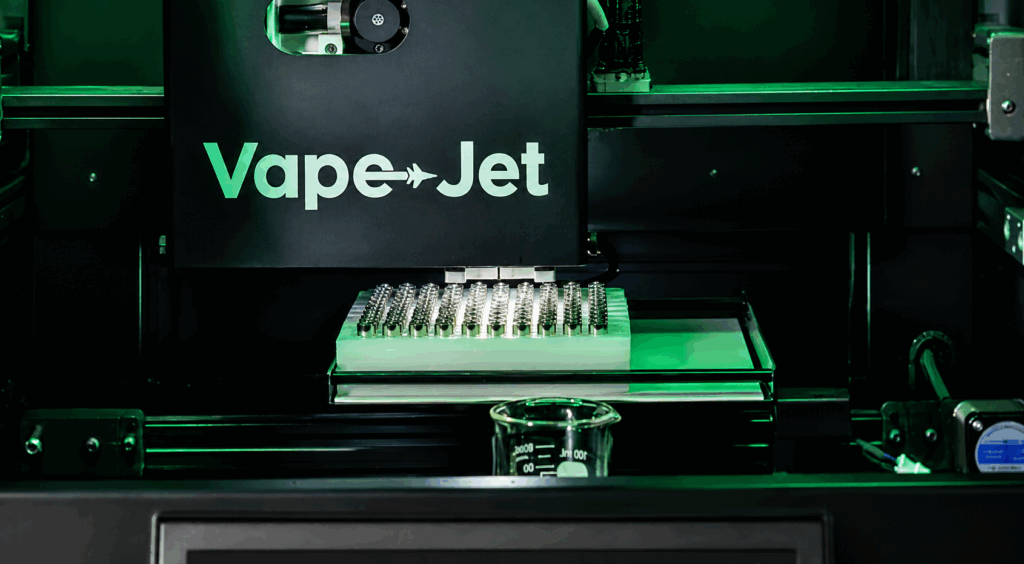
Another factor often overlooked when comparing cartridge filling machine prices is that equipment that meets current demand might not scale as production grows.
The equipment ROI calculator accounts for this. It compares the hours required to meet production targets against the available operating hours per shift.
It also flags facilities already exceeding capacity through overtime and estimates how many machines can support the target volume.
By evaluating production requirements across multiple shifts, operators can estimate how many filling machines they’ll need to meet future demand without creating bottlenecks or compromising throughput.
What the Calculator Deliberately Leaves Out
Our equipment ROI calculator estimates five-year ownership costs but deliberately excludes expenses that vary too much between operators to set reliable defaults.
These expenses include:
- Financing terms and lease structures
- Section 280E tax considerations
- Facility modifications
- Electrical requirements
- Operator training
- Potential equipment resale value
That said, each of these will affect the true cost of equipment ownership over time, depending on the facility, state, and financing arrangement. For a closer look at acquisition costs, read our guide to buying, leasing, or financing cannabis cartridge filling equipment.
How to Use These Numbers in a Capex Request
An equipment ROI calculation is most valuable when it helps decision-makers evaluate whether a capital investment is financially justified.
Before presenting an automation proposal to company leadership, replace the calculator’s default inputs with production data from your facility.
Your capital expenditure proposal should include:
- Current production costs: Document existing labor expenses, oil waste, rework rates, and weekly output.
- Equipment investment: Include the proposed machine purchase price and any additional implementation expenses.
- Projected annual savings: Estimate reductions in labor, excess oil consumption, rejected cartridges, and other operating costs.
- Production capacity: Demonstrate whether the proposed equipment can meet current and anticipated demand.
- Five-year ownership costs: Compare the total projected cost of each equipment option over the same period.
- Sensitivity analysis: Run conservative and expected scenarios to understand how changes in production volume or operating costs affect the investment.
Use these results to build an evidence-based equipment comparison that procurement teams, operations managers, and financial decision-makers can evaluate.
For additional confidence, request equipment-specific throughput, filling accuracy, maintenance, and service information from each vendor before finalising your investment assumptions.
Compare Your Cartridge Filling Equipment Costs With Vape-Jet
For the most accurate payback outlook, consider all the costs of owning a vape cartridge filling machine. That’s what this automation ROI calculator does.
When you shop with your own numbers instead of a vendor’s, you get a machine best suited to your operation and a realistic ROI.
Use our total cost of ownership calculator now to better understand your true vape cartridge filling machine cost and payback expectations.
Frequently Asked Questions
1. How much does a vape cartridge filling machine cost?
A vape cartridge filling machine can cost a few thousand dollars for manual or semi-automatic equipment or $50,000+ for advanced automated systems. Pricing depends on the level of automation, production capacity, filling accuracy, and features. Use our automation ROI calculator above to compare equipment costs and estimate your five-year total cost of ownership.
2. How long does it take an automated cartridge filling line to pay for itself?
The payback period for an automated cartridge filling line depends on the equipment’s price and your operation’s production volume, labor savings, and reductions in oil waste and rework. Higher-volume operations may recover their investment faster. The equipment ROI calculator in this guide can help estimate payback and evaluate potential savings over five years.
3. What labor rate should I use if I run two or three shifts?
If you run two or three shifts, use the actual hourly labor rate for each shift, including applicable overtime, shift differentials, and employer-paid payroll costs. If rates vary, calculate a weighted average based on hours worked. This provides a more accurate estimate of annual fill labor and changeover labor expenses.
4. Does this calculator include financing or lease costs?
No, this calculator does not include financing interest, lease payments, or other financing-related costs. These expenses vary by lender and agreement. Operators should evaluate financing separately when comparing equipment acquisition options and calculating their overall investment.
5. How accurate are the default waste and rework rates?
The calculator’s default waste and rework rates provide a starting point for estimating equipment costs, but actual results depend on filling accuracy, oil viscosity, cartridge hardware, and operating procedures. For more reliable projections, replace default percentages with production records that reflect your facility’s current oil losses, overfill rates, and rejected cartridges.
6. How many filling machines do I need for my weekly volume?
The number of filling machines you’ll need depends on your exact volume, machine throughput, shift length, and available production hours. Divide your weekly production target by how many cartridges each machine can realistically fill during your scheduled shifts. The calculator also identifies capacity limitations and estimates additional equipment needs as production increases.